

Table of Contents
Introduction
The rise of IoT has rapidly transformed business operations, and pairing it with AI amplifies the impact. Companies like Oracle, Microsoft, and Amazon integrated these technologies into their core strategies, making them central to e-commerce, cloud computing, healthcare, and robotics.
AI enables smarter tasks, real-time analysis, and better human-machine interaction, while IoT connects devices and systems for seamless communication. Together, they shift businesses from reactive responses to informed, automated action.
This blog explores how AI and IoT drive business value, improve operations, and deliver real-world results across industries.
How Does AI and IoT Integration Strengthen Business Performance in 2026?
When AI is added to IoT, devices go beyond monitoring to analyze data, spot patterns, and act with minimal human input. This lets businesses move from delayed reporting to real-time decision-making.
By 2026, integration will be fully operational. Companies are deploying unified architectures connecting devices, edge processing, cloud platforms, and enterprise systems, focusing on measurable business results rather than experiments.
Key developments shaping this shift include:
- Edge AI adoption: Data is processed closer to the source, reducing latency and lowering cloud dependency while supporting faster automated responses.
- Digital twin implementation: Physical assets are replicated in virtual models to simulate performance, test changes, and reduce operational risk before real-world execution.
- Predictive maintenance at scale: AI models continuously analyze device behavior, identifying early signs of failure and minimizing unplanned downtime.
- Connected supply chain visibility: IoT sensors combined with AI forecasting improve inventory accuracy, logistics planning, and demand alignment.
- Integrated enterprise data flows: Operational technology is increasingly linked with ERP, CRM, and analytics platforms, turning device data into structured business intelligence.
Market projections continue to reflect a strong economic impact. Fortune Business Insights projected to grow from USD 82.74 billion in 2026 to USD 781.32 billion by 2034.
Focus has moved from growth projections to execution. Companies are formalizing governance, securing devices, and aligning AI insights with business and operational goals, making integration a core capability rather than a separate initiative.
What Are The Advantages of Integrating AI with IoT Devices?
Statista reported IoT connections are expected to grow from 19.8 billion in 2025 to over 40.6 billion by 2034, with consumer devices accounting for 60%. China alone will host 7.51 billion devices.
Industries like energy, water, retail, transportation, and government already manage 100 million+ devices each. Across all sectors, IoT deployments are expected to exceed eight billion by 2033.
At this scale, AI is essential. It organizes data streams, detects patterns, and enables automated responses. In smart grids, connected vehicles, asset tracking, and IT systems, AI is a core operational component.
Key benefits of AI and IoT integration include:
1. Maximized Productivity:
With AI and IoT integration for business solutions, businesses can:
- Automate business processes,
- Increase output per employee, and
- Lower operational costs
IoT devices equipped with sensors collect vast amounts of data, which AI systems analyze in real time to detect trends, identify outliers, and provide accurate forecasts. For example, in industrial settings, IoT sensors track machine productivity, while AI algorithms predict maintenance needs, helping prevent costly breakdowns and downtime.
2. Enhancement of the Customer Experience:
Combining AI and IoT solutions enables businesses to gather deep insights into consumer behavior, preferences, and habits. AI and the IoT enable companies to deliver customers simpler, more distinct experiences.
Artificial intelligence algorithms can learn about consumers’ habits, preferences, and needs by analyzing data from IoT devices and other sources. Businesses can use this information to increase consumer satisfaction and loyalty by creating personalized recommendations, products, and services.
For example, smart home devices use IoT data to learn user preferences, making automatic adjustments to create a more personalized living environment.
Key benefits include:
- Deeper behavioral insights through continuous data collection from connected devices
- Personalized recommendations based on real usage patterns
- Proactive service delivery by anticipating customer needs
- Improved engagement and retention through tailored experiences
- Real-time adjustments that improve convenience and usability
3. Emerging Markets and Income Opportunities:
Unused data from the Internet of Things can help businesses find new product and service opportunities.
Integrating AI with IoT opens avenues for new income streams and business models. A good example is AI-driven analytics services that use data from the Internet of Things to provide clients with useful insights.
Integrating AI and the IoT into company solutions can also help develop smart goods and services that function as part of the larger system.
4. Supply Chain Productivity:
Internet of Things devices can collect data on transportation-related environmental variables, monitor inventory levels, and track shipment locations. Machine learning algorithms will analyze this data, identify delays or bottlenecks, and optimize routes based on demand predictions.
Businesses can improve their supply chain processes, save money, and guarantee on-time product delivery with its help.
Let’s see an example.
All the data that your IoT devices collect can be used in forecasting models. AI usually powers these models. This is how business managers optimize their inventory and make accurate predictions as per customer demand.
5. Increased Protection:
AI and IoT security solutions targeted towards specific industries can help in several ways. IoT sensors can monitor your workplace, detect issues, and alert you to potential dangers. Algorithms powered by AI can analyze this data in real time, issuing alarms and warnings to prevent mishaps or reduce risks.
Design and Implement AI and IoT Solutions Aligned with Your Requirements
Delays in digital execution reduce visibility and slow growth. A focused AI and IoT strategy delivers real-time insights, fewer manual processes, and faster decision-making. We design and implement AI and IoT solutions aligned with your industry, systems, and compliance needs, from architecture through deployment and optimization.
Request a ConsultationWhat Challenges Should Businesses Expect When Integrating AI and IoT?
Are you joining a network of companies building AI and IoT solutions for specific use cases? Or planning to partner with an IoT development firm or hire specialists for a standalone AI and IoT initiative?
Either way, successful AI-driven IoT development starts with understanding the practical obstacles below
- Data Security: AI-enabled IoT systems rely on large volumes of data. Storing and transmitting that data, often across cloud environments, increases the risk of cyberattacks and breaches. Security architecture, encryption standards, and access controls must be defined from the start.
- Privacy Risks: AI and IoT solutions process both public and sensitive data. Weak privacy controls can lead to regulatory penalties, reputational damage, and financial loss. Clear data governance policies and compliance monitoring are necessary.
- Complex Infrastructure Requirements: AI IoT solutions require distributed devices, edge components, cloud platforms, APIs, and analytics engines to work together. Designing, deploying, and maintaining this ecosystem demands time, budget, and technical depth.
- Data Management at Scale: Beyond security and privacy, organizations must manage data ingestion, cleansing, storage, lifecycle control, and model training pipelines. Without a structured data management framework, AI models and IoT analytics lose reliability.
- Ethical and Governance Concerns: AI usage raises concerns around bias, accountability, and transparency. When AI decisions are embedded into IoT systems, governance frameworks and ethical guidelines become essential to reduce risk and maintain stakeholder trust.
These challenges are not short-term issues. However, businesses can prepare for them by working with experienced IoT and AI specialists who understand architecture, governance, and risk management. With the right technical partner in place, organizations can design AI IoT solutions that are secure, compliant, and operationally sustainable.
You may also like: Selecting a Tech Partner for AI Project.
How Are AI and IoT Being Applied Across Industries?
1. Applying AI and IoT to the Health care Industry:
In healthcare, combining IoT devices with machine learning enables remote patient monitoring. Connected devices continuously collect patient data, giving care teams real-time visibility into health conditions and enabling faster intervention.
Wearable sensors track vital signs such as heart rate, blood pressure, and oxygen levels. AI systems analyze this data to detect irregular patterns, flag potential risks, and support treatment decisions based on individual patient data.
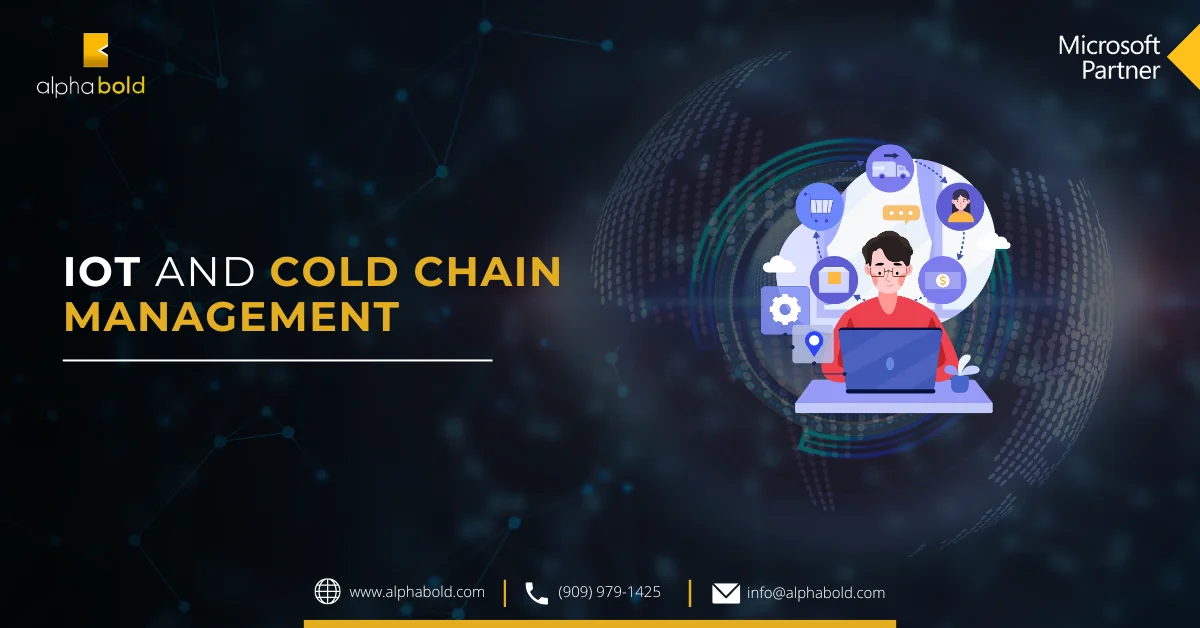
Bonus reading: IoT and Cold Chain Management
2. AI and IOT in Business: Energy and Utilities:
Allied Market Research predicts that by 2032, the worldwide market for artificial intelligence (AI) in renewable energy will be worth $4.6 billion, suggesting a bright future for this industry.
Combining AI with the Internet of Things can greatly impact the utility and energy industries. Distributed sensor networks that use artificial intelligence algorithms and IoT devices to improve power usage and distribution are known as smart grid systems. Monitoring energy use in real-time is necessary to implement demand-response methods to pinpoint inefficient locations.
Customers can monitor and control their energy use with smart meters, which also enable precise invoicing. AI and IoT integration enable predictive maintenance of solar panels and wind turbines, increasing energy output while reducing maintenance costs.
Read about our AI-IoT integrated solution: BOLDConnect
End-to-End AI and IoT Solutions to Boost Efficiency.
Transform operations, increase efficiency, and make faster, smarter decisions with AI and IoT solutions tailored to your industry and systems.
Request a ConsultationConclusion
AI and IoT integration is no longer optional. It drives operational efficiency, improves customer satisfaction, and creates new revenue opportunities. Businesses that adopt these technologies strategically can turn device data into actionable insights, automate processes, and make faster, more informed decisions.
Success depends on planning, secure data management, and partnering with experts who can align AI and IoT solutions with your systems, industry requirements, and compliance standards. With the right approach, organizations can reduce risk, improve productivity, and stay ahead in an increasingly connected, data-driven market.
FAQs
They can optimize inventory, track assets, automate tasks, and improve customer engagement with scalable solutions.
It processes data near the source, enabling real-time insights and reducing reliance on the cloud.
They monitor energy use, optimize resource use, and predict maintenance needs to reduce waste.
Retail, logistics, agriculture, and manufacturing use AI and IoT for predictive maintenance and smart operations.
Through efficiency gains, cost savings, reduced downtime, and new revenue from data insights.
Autonomous systems, digital twins, predictive analytics, and deeper software integration.