Dynamics 365 for Financial Services: Compliant, Unified, and Built to Scale

Banks, insurers, capital markets firms, and financial institutions rely on AlphaBOLD to implement Microsoft Dynamics 365 for financial services – connecting financial and customer data, enabling governed automation, and supporting regulatory compliance across complex, multi-entity environments.

Design Financial Services Operations with Dynamics 365 for Financial Services

Financial services organizations must modernize operations while meeting strict regulatory, security, and data governance requirements. Microsoft Dynamics 365 for financial services helps banking, insurance, and capital markets organizations unify financial and customer data, enable controlled automation, and improve visibility across regulated, multi-entity environments – without sacrificing audit readiness or compliance.

AlphaBOLD supports financial institutions with:

  • Unified financial systems that connect finance, service, and customer data through a centralized Dynamics 365 financial system for consistent reporting and auditability.
  • Controlled workflow automation that streamlines approvals and core processes without compromising compliance or governance.
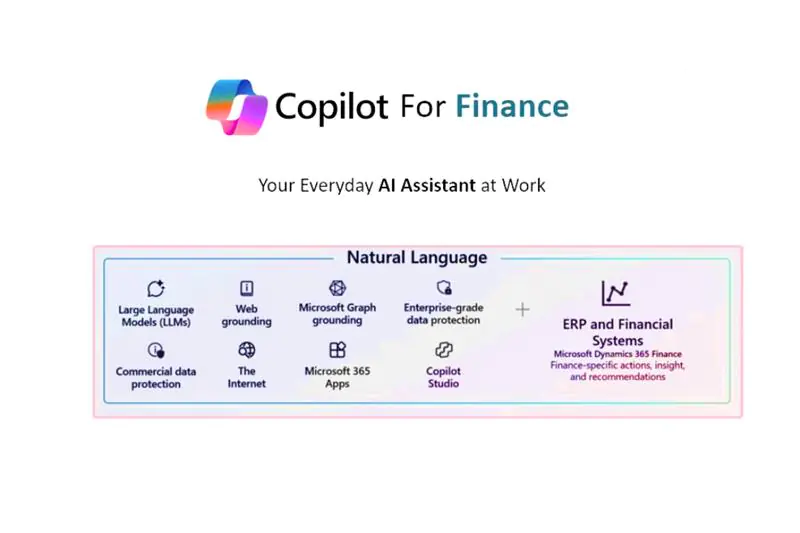
  • AI-assisted financial insights that surface trends, prioritize actions, and support decision-making within governed financial processes – powered by Microsoft Dynamics 365 Finance and Copilot.
  • Scalable financial management that supports global operations across complex regulatory environments using Dynamics 365 financial management capabilities.

Our Impact

100+

D365 Implementations Delivered

100+

Microsoft-Certified Consultants

20+

Years of Microsoft Experience

6

Industry Verticals Served

Who This Is Designed For

Microsoft Dynamics 365 for financial services is built for organizations with complex, regulated operating environments. AlphaBOLD works with three primary leadership groups:

Executive and Finance Leaders

Need accurate financial visibility, regulatory confidence, and controlled modernization across complex, multi-entity operations. Dynamics 365 Finance provides the reporting and auditability layer they require.

Operations and Service Leaders

Responsible for standardizing customer and service workflows across regulated financial operations without increasing risk or compliance exposure. D365 Customer Service and Copilot-assisted workflows reduce manual effort while maintaining governance.

Technology and Data Leaders

Focused on integrating financial systems securely, governing automation and AI use, and scaling platforms in line with enterprise architecture and data governance requirements. AlphaBOLD designs integration-ready D365 deployments from the ground up.

Work with AlphaBOLD to Strengthen Financial Services Operations

AlphaBOLD helps organizations in the Dynamics 365 for financial services industry design secure, compliant, and scalable financial and customer operations. We work with finance, operations, and technology leaders to improve visibility, streamline workflows, and support long-term growth within regulatory and governance boundaries.

Dynamics 365 Finance for Banking and Financial Institutions

Dynamics 365 Finance supports core financial management needs across banking, capital markets, insurance, and other regulated financial services organizations. As a purpose-built Dynamics 365 finance software, it is commonly applied to strengthen financial control, improve reporting accuracy, and support compliance across complex, multi-entity operating models.

Select a capability to explore:

Enterprise Financial Control and Reporting

Manage general ledger, accounts payable and receivable, budgeting, and financial reporting across entities while maintaining audit trails, approvals, and regulatory alignment. Dynamics 365 financial management capabilities provide the structured controls financial institutions require for internal and external reporting.

Multi-Entity and Multi-Currency Operations

Support group-level reporting, intercompany accounting, and global financial consolidation across regions, legal entities, and regulatory jurisdictions. Microsoft Dynamics 365 Finance handles complex currency conversions, intercompany eliminations, and consolidation workflows that span multiple geographies.

Regulatory-Aligned Financial Processes

Standardize finance workflows to support audit readiness, financial controls, and compliance requirements without relying on fragmented spreadsheets or disconnected systems. Dynamics 365 for financial services industry requirements are addressed through structured data models, role-based access, and configurable approval workflows.

Integration with Customer and Service Platforms

Connect financial data with Dynamics 365 customer and service applications to improve visibility across revenue, service costs, and customer-related financial activity.

AlphaBOLD helps financial services organizations apply Dynamics 365 Finance selectively, ensuring it complements existing core banking platforms and operational systems rather than replacing them unnecessarily.

AI, Copilot, and Agents Inside Dynamics 365 for Financial Services

In the Dynamics 365 for financial services industry, AI must operate within strict governance, security, and compliance boundaries – not around them. Copilot and autonomous agents in Dynamics 365 are designed to reduce manual work across service, sales, and operations while keeping human oversight and regulatory controls firmly in place. AlphaBOLD helps financial institutions apply these capabilities where they create measurable, auditable impact.

  • Copilot case summaries surface key context – customer profile, issue, priority, and timeline – so service teams act faster without scanning long case histories.
  • Copilot email drafting supports quicker, more consistent customer communications in regulated service workflows, reducing response time while maintaining compliance with communication standards.
  • Copilot knowledge drafting proposes knowledge content from resolved cases, strengthening repeatability and reducing rework across complaint and service teams.
  • Autonomous agents in Dynamics 365 scale team capacity by automating repeatable tasks, handoffs, and routing decisions – with configurable governance controls and audit trails. .
  • MCP tools in Copilot Studio allow agents to use approved tools and resources from connected MCP servers securely, extending automation across enterprise systems without exposing sensitive data.
  • AI governance and compliance controls including role-based access, permission boundaries, and Microsoft Purview integration ensure AI use in financial services stays within your defined data and security policies.
Copilot in Dynamics 365 for Financial Services generating case summaries to help teams act faster by surfacing key context like customer, issue, and priority.

Dynamics 365 for Financial Services Industry: Common Use Cases

These use cases show how Dynamics 365 for financial services, combined with Copilot and controlled automation, delivers improved control, consistency, and operational outcomes across regulated financial environments.
Function Problem Dynamics 365 Solution Business Outcome
Complaints Management Fragmented complaint workflows make it difficult to meet regulatory SLAs or maintain auditable records across channels. Dynamics 365 standardizes complaints and service workflows, enforces SLAs, and maintains auditable records across all channels. Over 80% of customer complaints resolved within regulatory timeframes vs roughly half prior to implementation.
Unified Financial Visibility Leadership lacks a single, trusted view of financial and customer data across products, entities, and geographies. Dynamics 365 connects financial data with customer, sales, and service interactions — giving leadership consolidated visibility across the enterprise. Clearer financial oversight, more consistent customer engagement, and better coordination across complex operating models.
AI-Assisted Operations Manual case handling, internal handoffs, and knowledge management consume significant team capacity. Copilot assists with case summarization, handoffs, knowledge management, and workflow routing — with governance controls in place. Reduced manual effort and improved process consistency while maintaining regulatory control and human oversight.
Regulatory Reporting and Audit Readiness Finance teams rely on fragmented spreadsheets and manual processes to produce regulatory reports, creating audit risk and reconciliation delays. Dynamics 365 Finance provides structured general ledger, audit trails, and configurable approval workflows that support regulatory reporting and internal controls. Standardized, auditable financial processes that reduce manual reconciliation effort and support regulatory submissions with confidence.
Multi-Entity Financial Consolidation Global financial institutions struggle to consolidate financials across legal entities, currencies, and regulatory jurisdictions in a timely and accurate manner. Dynamics 365 financial management handles intercompany accounting, multi-currency consolidation, and group-level reporting across regions and entities. Faster, more accurate group-level reporting with clear intercompany visibility and reduced risk of consolidation errors.

Where AlphaBOLD Adds Value

AlphaBOLD works with financial services organizations to design and deliver solutions that balance modernization, compliance, and operational control. Our approach focuses on applying the right capabilities in the right places to support long-term scale and regulatory confidence.

Financial services–focused solution design

Apply Dynamics 365 for financial services with a clear understanding of regulatory requirements, operating models, and risk constraints unique to financial institutions. We do not treat financial services as a generic ERP customization project.

Dynamics 365 Finance expertise, applied selectively

Use Microsoft Dynamics 365 Finance where it adds value to financial operations while integrating with existing core banking, ERP, or legacy systems to avoid unnecessary disruption and protect operational continuity.

Enterprise integration and scalability

Build scalable solutions that integrate with CRM, ERP, data platforms, and the full Microsoft ecosystem to support multi-entity, multi-region growth without rebuilding existing systems.

Governed automation and AI readiness

Design Dynamics 365 for financial services solutions that support intelligent automation and AI use within clearly defined governance, security, and compliance boundaries – not around them.

Implementation Track Record in Regulated Industries

AlphaBOLD brings implementation experience across banking, insurance, and capital markets – applying Dynamics 365 financial management with the rigor regulated industries demand, including audit trail design, data governance, and controls documentation.

Long-Term Operability, Not Just Deployment

Our engagements are designed for long-term operability and auditability – not just go-live success. We build Dynamics 365 for the financial services industry with post-implementation support, optimization, and scalability built into the architecture from day one.

How AlphaBOLD Implements Dynamics 365 for Financial Services

Every Dynamics 365 financial services engagement at AlphaBOLD follows a structured, compliance-aware implementation approach. We do not use generic ERP playbooks – we design deployments around your regulatory obligations, operating model, and data governance requirements from the first conversation.

1

Assess

Evaluate your current financial systems, compliance posture, integration landscape, and readiness for Microsoft Dynamics 365 finance capabilities.

2

Design

Design a Dynamics 365 for financial services architecture that fits your regulatory environment, operating model, and data governance requirements.

3

Configure

Configure Dynamics 365 Finance, customer, and service modules with the controls, workflows, and integrations your financial institution requires.

4

Govern

Establish AI governance, security controls, audit trails, and data policies before any production deployment or user rollout.

5

Scale

Expand Dynamics 365 financial management capabilities across entities, regions, and teams with ongoing optimization and compliance alignment.

FAQs

How does Dynamics 365 support regulatory and audit requirements in financial services?

Dynamics 365 for financial services provides structured data models, role-based access, audit trails, and workflow controls that support regulatory reporting and internal audits. When implemented correctly, it helps financial institutions standardize processes while maintaining traceability, data integrity, and compliance across entities and regions.

Can Dynamics 365 integrate with existing core banking, ERP, or legacy systems?

Yes. Dynamics 365 is commonly integrated with core banking platforms, ERP systems, data warehouses, and third-party applications using Microsoft Dataverse, APIs, and integration services. AlphaBOLD focuses on designing integrations that preserve system boundaries while improving visibility and reducing manual handoffs.

How is AI used in Dynamics 365 without creating compliance or data-risk issues?

AI capabilities such as Copilot and agents are applied within governed workflows, using existing security, permissions, and data policies. In financial services environments, AI is typically used to assist users such as summarizing cases, prioritizing work, or supporting decision-making rather than executing uncontrolled actions.

How does AlphaBOLD ensure Dynamics 365 solutions are designed specifically for financial services?

AlphaBOLD approaches Dynamics 365 implementations with a financial services lens, considering regulatory obligations, operating models, data governance, and risk controls from the outset. Our work emphasizes structured processes, controlled automation, and scalable architecture rather than generic CRM or ERP customization.

What differentiates AlphaBOLD from general Dynamics 365 implementation partners?

AlphaBOLD combines Dynamics 365 platform expertise with deep experience designing enterprise-grade solutions in regulated industries. We focus on long-term operability, auditability, and integration readiness, helping financial services organizations adopt Dynamics 365 in a way that aligns with governance, security, and compliance expectations.

How is Dynamics 365 Finance used in banking and financial institutions without replacing core banking systems?

Dynamics 365 Finance is typically used alongside core banking platforms rather than as a replacement. In banking and financial services environments, it supports enterprise financial management functions such as general ledger, budgeting, financial reporting, intercompany accounting, and regulatory-aligned finance processes. AlphaBOLD designs Dynamics 365 Finance implementations to integrate with existing core systems, ensuring strong financial control, auditability, and reporting while preserving the integrity of core banking operations.


What is the difference between Dynamics 365 Finance and Dynamics 365 for financial services?

Dynamics 365 Finance is a Microsoft ERP module focused on financial management – general ledger, accounts payable and receivable, budgeting, and financial reporting across entities. Dynamics 365 for financial services is a broader term covering the full suite of Dynamics 365 applications – including Finance, Customer Service, and Sales – applied to the specific needs of banks, insurers, and capital markets firms. AlphaBOLD helps financial institutions determine which modules apply to their operating model and implements them in a coordinated, compliance-aware way.

What is the typical cost and timeline for a Dynamics 365 financial services implementation?

Timelines and costs vary based on scope, number of entities, integration complexity, and regulatory requirements. A focused Dynamics 365 Finance implementation for a single-entity financial institution typically spans 3-6 months. Multi-entity, multi-region deployments with customer service and Copilot capabilities generally run 6-12 months. AlphaBOLD conducts an upfront assessment to scope the engagement accurately before any commitment is made.

Browse the Blogs

Explore our insightful blog for thought leadership, industry trends, and practical tips to unlock the full potential of your technology investments.