
5 CRM Software Strategies That Can Help Improve Customer Retention

Table of Contents
Introduction: What is CRM?
The global CRM market, valued at $63.91 billion in 2022, is now projected to surpass $126 billion in 2026 and reach $262 billion by 2032 growing at a CAGR of 12.8%. This acceleration is driven by three forces: widespread digital transformation, the strategic priority of customer retention in competitive markets, and the integration of generative AI into CRM platforms.
CRM systems allow businesses to manage interactions and data for customers and prospects in one centralized platform. However, it’s important to recognize that the use of CRM is not a one-size-fits-all solution. How CRMs serve different industries such as consumer goods compared to venture capital vary significantly, catering to unique needs and relationship dynamics.
Customer retention, a critical aspect of business success, is greatly influenced by how effectively a company can foster loyalty and satisfaction among its existing customers. With acquisition costs being up to 25 times higher than retention costs, focusing on customer retention has become a priority for businesses of all sizes. CRM systems improve customer retention rates by up to 27%, and 47% of CRM users report a significant impact on both retention and customer satisfaction making CRM one of the highest-ROI investments available to growing businesses.
Why Customer Retention Is Getting Harder and What CRM Solves
Before diving into the strategies, it’s worth naming the problem clearly. Customer expectations have shifted. According to Salesforce research, 79% of customers now expect a consistent experience across all channels digital, phone, email, and in-person. Most businesses are not delivering that consistency because their customer data lives in disconnected systems.
The result is a retention problem that doesn’t show up on a product roadmap it shows up in churn rates. The table below outlines the most common operational pain points that CRM directly addresses:
| Pain Point | Operational Impact | Business Risk |
|---|---|---|
|
Manual data entry & updates |
3–5 hrs/week per rep lost |
Inaccurate pipeline forecasting |
|
Siloed customer data |
Inconsistent cross-team outreach |
Duplicate records, poor handoffs |
|
Reactive customer service |
Slow ticket resolution times |
Churn from unresolved issues |
|
Generic mass communications |
Low open and response rates |
Customer disengagement |
|
No churn signal visibility |
At-risk accounts go undetected |
Revenue leakage |
|
No AI-assisted forecasting |
40%+ lower forecast accuracy |
Missed pipeline opportunities |
Each of these problems has a direct CRM solution. The following five strategies map to these pain points and include updated technical guidance for how modern platforms like Microsoft Dynamics 365 address them in 2026.
1- Collect In-Depth Customer Data:

A CRM system consolidates all customer interactions and data points in one centralized platform, providing a holistic view of each customer. By gathering data on purchase history, behaviors, preferences, demographics, and communication history, you gain valuable insights into customers that can be used to tailor marketing and strengthen relationships.
In 2026, leading CRM platforms go beyond passive data collection. Microsoft Dynamics 365 Customer Insights Data now delivers real-time, unified customer profiles that feed directly into Copilot and AI agents, enabling teams to act on live behavioral signals rather than static records. This means a sales rep opening a customer account sees not just historical purchase data, but real-time engagement signals, sentiment trends, and next-best-action recommendations all generated by AI and grounded in that customer’s actual history.
Technical implementation note: Unified customer profiles in Dynamics 365 Customer Insights are built on Microsoft Dataverse, which allows data ingestion from ERP, e-commerce, support desk, and marketing platforms into a single semantic layer. This eliminates the data silos that cause inconsistent customer experiences and feeds the AI models that power retention recommendations.
Related Read: : Why Copilot Plugins Are Worth the Investment in Dynamics 365
2- Automate Communication:
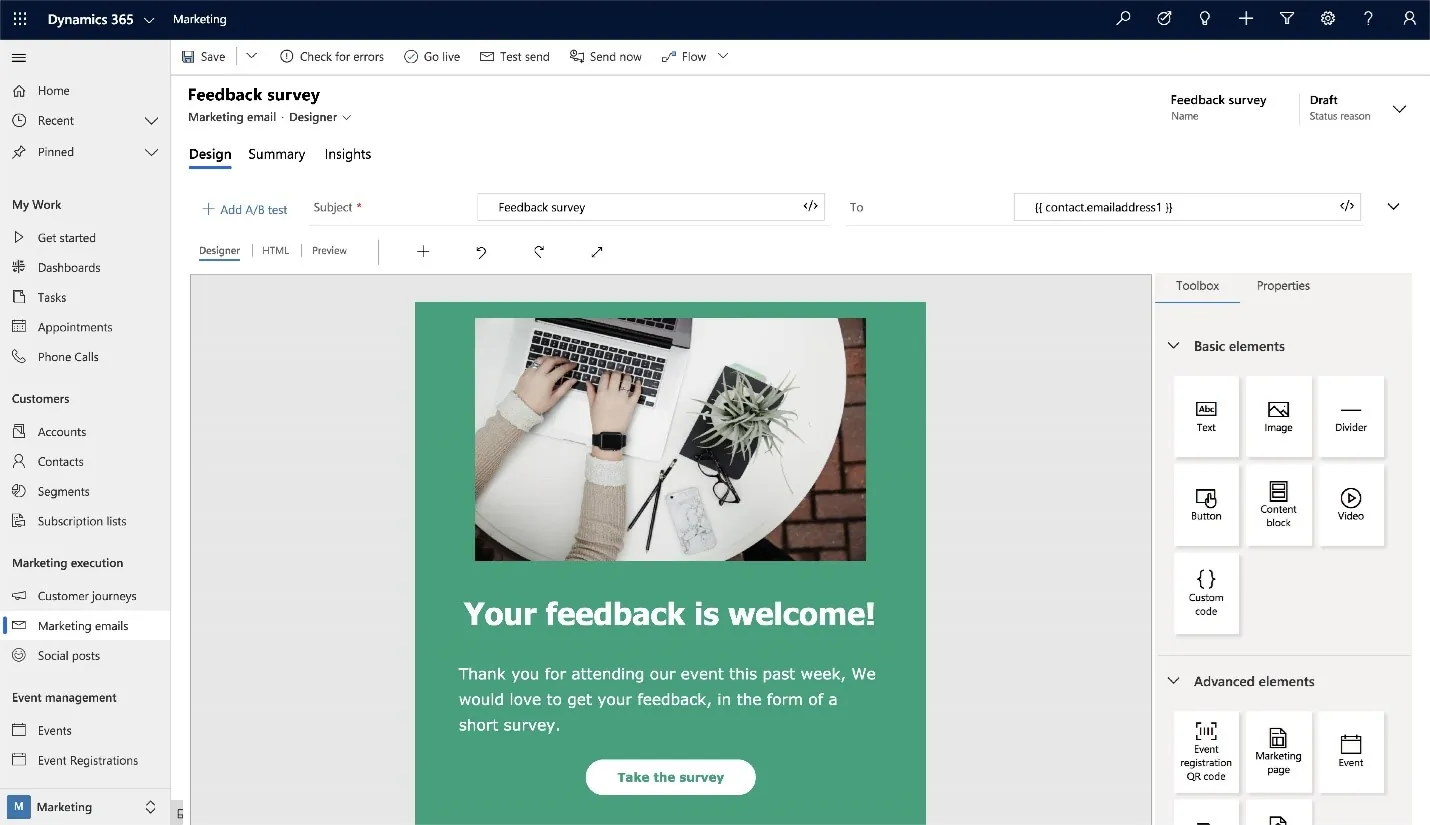
CRM systems allow you to set up automated email campaigns and notifications based on customer behaviors and preferences. Personalized automated emails improve conversion rates by 202%. Sending timely, relevant communications – like order confirmations, special offers, or service reminders – makes customers feel valued. Automating these messages improves consistency and saves time.
Modern CRM automation has evolved significantly beyond rule-based email triggers. In Dynamics 365 Customer Insights Journeys, AI-driven customer journey orchestration allows businesses to craft personalized, multi-channel experiences across email, SMS, push, and ads using natural language prompts via Copilot. Rather than manually building trigger sequences, marketers describe the journey outcome and Copilot generates the logic.
Key 2026 capabilities in Dynamics 365 communication automation:
- Copilot-generated email drafts based on CRM data and previous interactions reducing writing time by up to 40%
- AI-driven send-time optimization that identifies the highest-engagement window per individual contact
- Agentic outreach via the Sales Qualification Agent, which autonomously researches leads, personalizes outreach, and follows up without manual rep involvement
- Teams meeting summaries auto-generated by Copilot, with key action items pushed back into the CRM record
Stat: Businesses using AI within their CRM are 83% more likely to exceed sales goals. AI improves sales forecast accuracy by over 40% and increases repeat sales and customer retention by 15% through hyper-personalization and automation.
Related Read: : The Integration of AI with Microsoft Power Platform
3- Improve Customer Service:

With all customer data easily accessible in one dashboard, customer service teams can deliver personalized service that makes loyal customers feel known and appreciated. Customer service interactions also provide a valuable touchpoint for identifying upsell opportunities or issues that may lead customers to churn if not addressed proactively.
In 2026, Dynamics 365 Customer Service brings agentic AI into the support workflow. Copilot assists service agents by diagnosing issues, suggesting resolutions, and drafting responses in real time reducing average handle time and improving first-contact resolution rates. AI agents handle routine inquiries autonomously across voice, digital, and social channels, escalating only when human judgment is needed.
The Quality Evaluation Agent now generally available in Dynamics 365 automatically scores support interactions against defined quality criteria, flags compliance gaps, and surfaces coaching opportunities for supervisors. This removes the manual QA sampling bottleneck and gives service leaders a continuous view of team performance.
For retention specifically: Copilot in Customer Service flags at-risk accounts based on support interaction patterns rising ticket frequency, sentiment decline, unresolved escalations and surfaces these signals to account managers before the customer churns. This proactive churn detection is one of the highest-value CRM capabilities available in 2026.
Stat: AI chatbots in CRM improve customer service response times by 40%, offering 24/7 support. Morgan Stanley Wealth Management reported time savings of approximately 30 minutes per customer meeting after deploying its AI-powered CRM assistant to its advisor team.
4- Coordinate Sales Efforts:
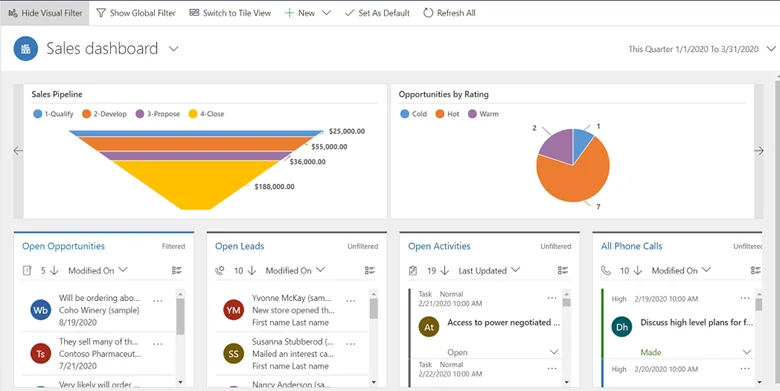
CRM systems centralize prospect and customer data from all channels, making it accessible across sales teams and departments. This improves outreach coordination, reduces redundant communication, and helps ensure consistency in the sales process. It also allows teams to track deal progress and flag at-risk accounts easily.
The 2026 release wave 1 for Dynamics 365 Sales introduces deeper Copilot integration across CRM and Microsoft 365 signals meaning deal intelligence now draws from email threads in Outlook, meeting transcripts in Teams, and CRM opportunity data simultaneously. Sellers get a unified context view before every customer interaction without manually aggregating data.
The Sales Close Agent, introduced in late 2025, now works autonomously to move deals forward identifying stalled opportunities, recommending next steps, drafting follow-up proposals, and alerting sellers to deal risk signals. This shifts the sales team from reactive pipeline management to AI-guided deal execution.
Technical note: Dynamics 365 Sales MCP Server reached general availability in October 2025, enabling CRM data to be accessed by external AI tools including Copilot Studio-built agents, ChatGPT, and Claude. This opens CRM data to a broader agentic ecosystem useful for firms building custom AI workflows on top of their Dynamics 365 data.
Stat: CRM reduces sales cycle time by 8–14%. Sales teams using CRM automation save 4–5 hours per week per rep by eliminating manual data entry and duplicate work. CRM automation reduces administrative tasks by up to 80%
Related Read: : Dynamics 365 Implementation Cost
5- Track Customer Engagement:
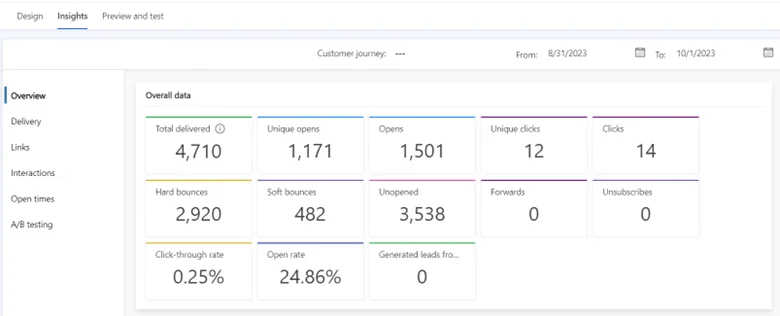
CRM software allows you to monitor key engagement metrics like email open rates, content downloads, site visits, lead response rates, and support ticket frequency. Tracking this over time identifies less engaged customers at higher risk of churning. Being proactive about re-engaging flagged customers with personalized outreach and resolving pain points is crucial for retaining them.
In 2026, engagement tracking in Dynamics 365 goes beyond metric dashboards. Customer Insights Journeys now enables real-time behavioral triggers a prospect revisiting a pricing page, a customer whose support ticket remains unresolved past an SLA threshold, or a contact who has stopped opening communications for 30 days all automatically trigger defined re-engagement workflows without manual intervention.
The platform’s AI-driven churn prediction models analyze engagement decay patterns across contact touchpoints and assign churn probability scores to accounts. Sales and customer success teams see a prioritized list of at-risk accounts with recommended actions not just a raw list of disengaged contacts to sort through manually.
For B2B firms using Dynamics 365 with Power BI, the integration surfaces customer health scores across the entire book of business in a single reporting layer combining CRM engagement data, support history, invoice payment patterns, and NPS scores into a unified retention dashboard.
Stat: CRM systems improve customer retention rates by up to 27%. 75% of organizations using CRM software have seen significant improvement in customer satisfaction metrics. A 5% increase in customer retention can increase profits by 25–85%.
6. Leverage AI and Hyper-Personalization for Retention at Scale
This section reflects a significant update to the original blog, incorporating one of the most impactful CRM developments of 2025–2026: the shift from rules-based automation to AI-driven hyper-personalization.
The original five strategies remain valid but without AI, they operate at the ceiling of what manual configuration allows. With AI, each strategy compounds. Data collection feeds smarter models. Automation becomes context-aware. Service becomes proactive. Sales coordination becomes predictive. Engagement tracking becomes prescriptive.
In Dynamics 365, hyper-personalization is operationalized through three mechanisms:
Unified Customer Profiles via Customer Insights
Real-time profiles aggregated from all data sources CRM, ERP, support, web behavior create a single record of truth per customer. Copilot and AI agents draw from this profile to personalize every interaction without requiring manual context-switching by the rep.
Predictive Lead Scoring and Churn Models
Dynamics 365 uses machine learning models trained on historical CRM data to score leads by conversion probability and flag customers by churn risk. These scores are surfaced directly in the sales and service UI no separate analytics tool required. AI improves sales forecast accuracy by over 40%, and AI-driven lead scoring increases conversion rates by up to 20%.
Agentic AI Workflows
The 2026 release wave introduces deeper agentic orchestration across Dynamics 365 AI agents that act autonomously within defined boundaries. In a retention context, this means an agent can detect a churn signal, send a personalized re-engagement email, schedule a check-in call, and log the outcome in the CRM without any human initiating the workflow. The human reviews and approves; the agent executes.
Stat: 81% of organizations are predicted to use AI-powered CRM systems in 2026. Businesses using AI-powered CRM are 83% more likely to exceed sales goals. AI and big data adoption in CRM is projected to increase by 97% between 2025 and 2030.
7. Address CRM Data Quality The Foundation Everything Else Depends On
One of the most underreported challenges in CRM adoption is data quality and it’s the primary reason CRM implementations underdeliver. According to industry research, 76% of CRM users report that less than half of their organization’s CRM data is accurate and complete. 37% have lost revenue directly as a result of poor CRM data quality.
No AI model, automation workflow, or hyper-personalization strategy can function reliably on top of fragmented, stale, or duplicate data. This makes data governance a CRM strategy in its own right not just an IT concern.
Dynamics 365 addresses this through:
- Automatic data validation and enrichment via Copilot in Dynamics 365 Sales the system flags incomplete records, suggests missing fields, and auto-populates data from trusted external sources
- Duplicate detection rules in Dataverse that prevent conflicting records from being created at the point of entry
- Data quality scoring dashboards in Customer Insights that surface data health metrics across the CRM giving admins visibility into coverage gaps before they affect reporting or AI model accuracy
Firms that invest in data quality before scaling AI adoption consistently see faster ROI from CRM. This is the foundation layer and it is often skipped in favor of launching automation workflows on top of incomplete data.
Ready To Explore How A CRM System Can Transform Your Business?
Request a personalized CRM consultation with AlphaBOLD's experts today and take the first step towards a more efficient, customer-centric business strategy.
Request a ConsultationChoosing the Right CRM Services Partner: A Key to Maximizing CRM Efficiency
In addition to understanding the multifaceted benefits of CRM systems, it’s equally crucial to recognize the role of the right CRM services partner in maximizing these benefits. A competent CRM partner brings more than just software to the table; they provide expertise in customization, integration, and strategic planning tailored to your specific business needs.
The right partner helps in navigating the myriad options available in the CRM landscape, ensuring that the selected system aligns perfectly with your business processes, goals, and customer engagement strategies. They also play a pivotal role in training your team, offering technical support, and providing insights into emerging CRM trends and technologies.
In 2026, the right CRM partner also brings AI readiness expertise helping firms assess their data foundation, design governance frameworks, and implement Copilot and agentic AI capabilities in a way that is governed, compliant, and integrated with existing enterprise systems. This is a meaningfully different capability from CRM implementation alone.
AlphaBOLD: Your Expert Partner for Microsoft Dynamics 365 Consulting
In the realm of CRM systems, the choice of consultant can significantly influence the success of your implementation. This is where AlphaBOLD stands out as an exemplary choice for your Microsoft Dynamics 365 consulting needs. As a trusted partner of Microsoft, AlphaBOLD has consistently provided cutting-edge Microsoft Dynamics 365 consulting solutions to a global clientele.
AlphaBOLD’s extensive experience in Dynamics 365 CRM implementation and customization sets it apart. Their team of Dynamics CRM 365 experts possesses deep knowledge and skills, ensuring that your organization’s specific requirements are proficiently met. This expertise is further enhanced by their broad industry experience, offering a unique perspective invaluable in developing tailor-made solutions. These solutions are not just about adapting to current market needs but are geared towards fostering growth and agility in the face of market changes.
Choosing AlphaBOLD as your Microsoft Dynamics 365 consultant means tapping into a wealth of knowledge and expertise. Their consultants are not just familiar with Dynamics 365; they possess an intimate understanding of its every facet. Begin your journey with AlphaBOLD today and take a significant step towards transforming your organization’s CRM capabilities and overall operational efficiency.
AlphaBOLD’s Dynamics 365 practice includes full-lifecycle delivery across Customer Insights, Sales, Customer Service, and Contact Center with dedicated capability in Copilot configuration, AI agent deployment, and data pipeline architecture for firms ready to move from standard CRM to AI-first customer engagement. Forrester named Microsoft a Leader in The Forrester Wave: CRM, Q1 2025, recognizing its unified platform and AI capabilities and AlphaBOLD delivers that platform end-to-end.
To further explore how AlphaBOLD can help you select the right CRM for your business, read our Comprehensive Guide to CRM Software Selection.
Conclusion
As we’ve explored, CRM software is not just a technological tool but a transformative strategy for improving customer retention and driving business growth. Businesses can significantly reduce customer churn and boost long-term profitability by effectively leveraging CRM systems to collect comprehensive customer data, automate communication, enhance customer service, coordinate sales efforts, and track engagement.
In 2026, those five strategies are amplified by AI. Dynamics 365 Copilot, agentic workflows, unified customer profiles, and predictive churn models turn CRM from a system of record into a system of action one that proactively surfaces retention opportunities, automates the follow-through, and keeps the human advisor or rep focused on judgment and relationships rather than administrative tasks.
In conclusion, embracing a customer-centric approach with the right CRM strategy and an expert partner like AlphaBOLD is the key to unlocking the full potential of CRM systems. This approach streamlines operations and nurtures lasting customer relationships, paving the way for sustained success and market leadership. Contact AlphaBOLD today for a comprehensive CRM consultation and embark on your transformative journey towards an enhanced customer relationship management system and business excellence.
FAQs
CRM (Customer Relationship Management) software centralizes customer data, interactions, and communication history in one platform. It helps businesses retain customers by enabling personalized outreach, proactive service, and early identification of at-risk accounts. In 2026, CRM platforms like Microsoft Dynamics 365 also incorporate AI and Copilot capabilities that automate retention workflows surfacing churn signals, triggering re-engagement sequences, and recommending next-best actions without manual intervention.
CRM systems improve customer retention rates by up to 27% according to Aberdeen Group research. 47% of CRM users report a significant impact on both customer satisfaction and retention. Businesses that adopt AI-powered CRM capabilities see an additional 15% increase in repeat sales and customer retention through hyper-personalization and organizations using AI within CRM are 83% more likely to exceed their sales goals.
On average, businesses earn $8.71 for every $1 spent on CRM software (Nucleus Research). When properly implemented, CRM ROI can increase to 245%. Businesses using CRM report a 300% increase in lead conversion rates, a 16% boost in customer retention, and a 21% rise in agent productivity. Sales teams also save 4–5 hours per week per rep by eliminating manual data entry and administrative tasks.
CRM automation executes predefined rule-based sequences for example, sending a follow-up email 3 days after a demo. Agentic AI goes further: it can autonomously plan and execute multi-step workflows, adapt based on context, and take actions across multiple systems without a human initiating each step. In Dynamics 365, the Sales Close Agent and Sales Qualification Agent are examples of agentic AI they research leads, personalize outreach, flag deal risks, and follow up on opportunities without waiting for rep input. Agentic AI is not a replacement for human judgment; it handles execution while humans handle decisions.
Dynamics 365 Copilot improves retention through several mechanisms: it surfaces at-risk account signals from engagement and support data, drafts personalized re-engagement communications based on the customer’s actual history, generates call summaries and next-step recommendations after customer meetings, and automates follow-through on renewal and upsell workflows. Copilot draws from both CRM data and Microsoft 365 signals Outlook emails, Teams meetings, SharePoint documents to give sales and service reps a complete context view without manual data aggregation. Sellers using Copilot report spending up to 40% less time on administrative tasks.
The most common reasons are poor user adoption, inadequate training, and most critically poor data quality. 76% of CRM users report that less than half of their organization’s CRM data is accurate and complete. This data quality problem is the primary reason AI-powered CRM features underperform: the models are only as reliable as the data they draw from. Firms that invest in a clean, unified data layer using tools like Dynamics 365 Customer Insights and Dataverse before scaling automation and AI consistently outperform those that bolt AI onto fragmented data.
For B2B retention, the highest-value CRM features are: account health scoring (combining support history, engagement, and payment data into a single retention signal), renewal pipeline tracking with automated reminders and propensity scoring, case escalation workflows that surface unresolved issues to account managers before they affect renewal conversations, and executive business review (EBR) automation that compiles usage, performance, and ROI data into presentation-ready formats. Microsoft Dynamics 365 Customer Service and Customer Insights together cover all of these natively, with Copilot available to generate the narrative summaries and next-best-action recommendations on top of the data.
Both platforms have strong retention capabilities, but the key differentiator in 2026 is ecosystem integration. Dynamics 365 is natively integrated with the Microsoft 365 suite Outlook, Teams, SharePoint, Power BI, and Azure which means customer signals from email, meetings, and documents flow into the CRM automatically. For firms already operating on Microsoft infrastructure, this eliminates the data integration overhead that often limits Salesforce deployments. Forrester named Microsoft a Leader in The Forrester Wave: CRM, Q1 2025, specifically recognizing its unified platform and AI capabilities. Salesforce holds a 23.9% global market share and remains the dominant standalone CRM, but Microsoft’s integrated stack gives it a structural advantage for retention use cases that require cross-platform data.
Explore Recent Blog Posts