

Table of Contents
Introduction
IoT systems generate massive data volumes that must be processed somewhere. The core Edge vs. Cloud decision ultimately comes down to where processing should occur, either locally at the device layer or in remote infrastructure.
Edge computing handles data near its source, resulting in minimal latency. Cloud computing processes data on remote servers accessed via the internet. Each approach solves different problems, and choosing the wrong one can result in a loss of speed, bandwidth, or infrastructure spend.
This blog breaks down when to use edge computing, when to use cloud computing, and how to align your IoT computing strategy with your operational needs.
What is Cloud Computing in IoT?
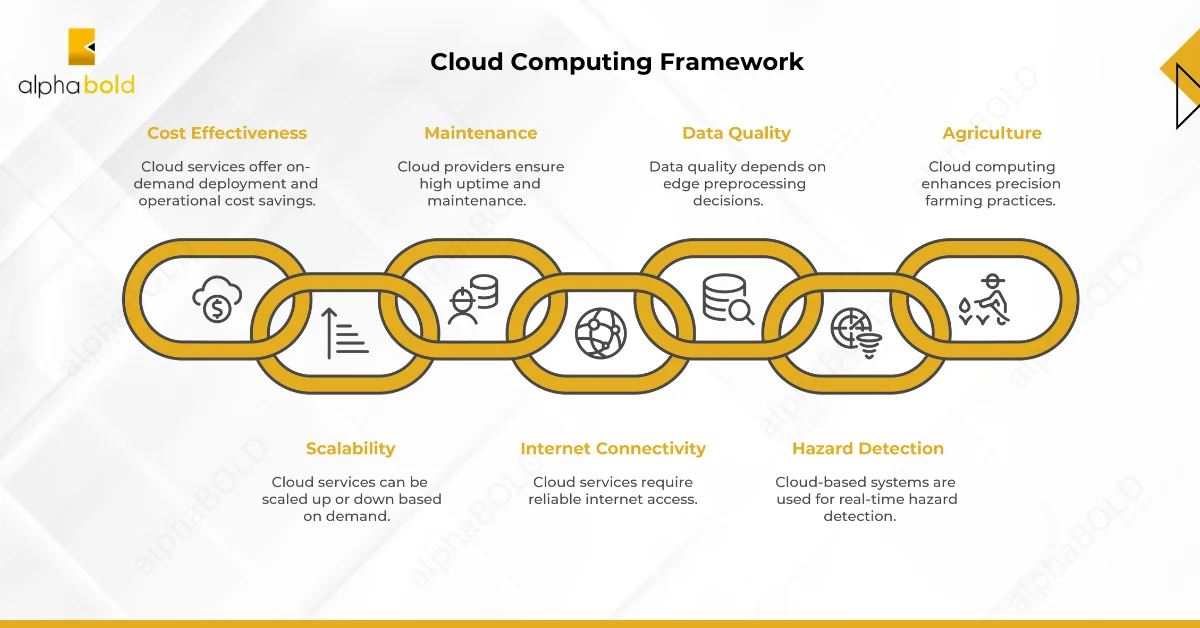
Cloud computing processes IoT data on remote servers managed by providers like Microsoft Azure, AWS, or Google Cloud. It plays a central role in Edge vs. Cloud decisions because it offers scalable infrastructure without upfront hardware costs. This makes it suitable for applications that can tolerate latency and require centralized analysis and processing.
Most Internet of Things (IoT) systems send structured or semi-structured data through REST, MQTT, or WebSocket protocols. The cloud server then processes this data according to your business logic.
Key Benefits of Cloud Computing:
- Cost Effective: Cloud services operate on a pay-as-you-go model, eliminating the need for capital expenditure. However, high data transfer volumes or computationally intensive workloads can quickly increase costs.
- Scalability: You can scale resources up during peak demand and scale down when idle. This flexibility supports seasonal or variable workloads without over-provisioning.
- Maintenance: Cloud providers handle infrastructure maintenance and guarantee 99.99% uptime in most service agreements. Your team avoids hardware management overhead.
Bonus Reading: 5 Useful Tactics to Overcome IoT Connectivity Challenges
Limitations of Cloud Computing:
Internet Connectivity: Cloud systems require stable connectivity. Network disruptions can halt operations entirely, making the cloud unsuitable for mission-critical, real-time applications.
Latency: Data must travel to remote servers and back, introducing delays. For time-sensitive decisions, this lag can be unacceptable.
Data Transfer Costs: Sending high-fidelity data continuously consumes bandwidth and increases costs. This becomes problematic for video streams or high-frequency sensor data.
When to Use Cloud Computing for IoT?
- Hazard Detection: Monitoring natural disasters requires data from sensors spread across wide geographic areas. A centralized cloud server aggregates this information and triggers alerts based on collective patterns.
- Precision Agriculture: Field sensors track soil moisture, nutrient levels, and weather patterns. Cloud platforms analyze this data to automate irrigation and fertilizer applications, improving yields without requiring on-site processing power.
Build a Scalable Cloud-First IoT Environment
We help you evaluate Edge vs. Cloud computing strategies to align with your operational demands, ensuring optimal performance, cost-efficiency, and future readiness.
Request a ConsultationWhat is Edge Computing in IoT?
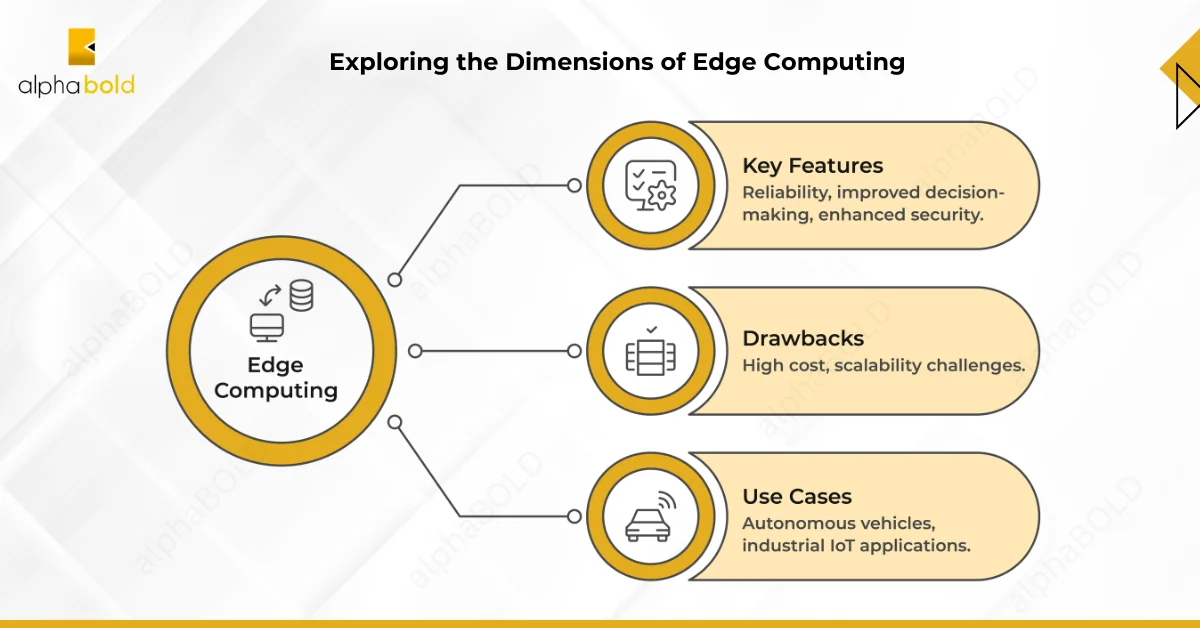
Edge computing processes data at or near the device that generates it, using a localized network. It is a key part of the Edge vs. Cloud discussion because it removes the need to send every data point to the cloud, reducing latency and bandwidth use while improving decision speed.
Edge devices handle computation on-site. This makes them ideal for applications where milliseconds matter or connectivity is unreliable.
Key Features:
- Reliability: Edge systems operate independently of internet connectivity. Network failures don’t halt operations, which is critical for remote or unstable environments.
- Speed: Data remains local, allowing for real-time processing. Decisions are made instantly without waiting for cloud round-trips.
- Improved Data Quality: Without bandwidth constraints, edge systems can process full-resolution data. This leads to more accurate analysis and better outcomes.
- Enhanced Security: Edge computing reduces data exposure by keeping sensitive information local. However, you must still implement encryption, secure boot, and network segmentation to protect against physical and digital threats.
Limitations of Edge Computing:
- High Initial Cost: Edge infrastructure requires capital expenditure for hardware and ongoing maintenance. This includes device management, firmware updates, and physical security.
- Limited Scalability: Adding capacity means purchasing and installing new hardware. This takes time and increases complexity compared to spinning up cloud resources.
Bonus Reading: Overcoming IoT Scalability Challenges with Edge AI
When to Use Edge Computing for IoT?
- Autonomous Vehicles: Self-driving cars process data from cameras, radars, and lidars in milliseconds. Internet latency can be fatal in critical situations, so all decisions are made on the edge.
- Industrial IoT and Predictive Maintenance: Manufacturing equipment generates real-time sensor data that must be analyzed instantly. Edge computing enables immediate alerts when machines show signs of failure, preventing costly downtime.
Further Reading: IoT in Construction: Benefits and Practical Use Cases
How Do Edge vs. Cloud Computing Compare?
| Criteria | Cloud Computing | Edge Computing |
|---|---|---|
|
Latency |
Higher due to data transmission to remote servers. |
Low as data is processed at or near the source |
|
Bandwidth Usage |
Consumes more by transmitting raw data continuously. |
Reduces bandwidth by processing locally. |
|
Scalability |
Highly scalable with minimal infrastructure changes |
Limited by local hardware capacity. |
|
Use Cases |
Analytics, backups, environmental monitoring. |
Autonomous systems, industrial IoT, real-time control. |
|
Reliability |
Dependent on network and provider uptime. |
Works independently of internet connectivity. |
|
Data Security |
Centralized policies and compliance controls. |
Requires distributed endpoint protection. |
|
Cost Structure |
OPEX model; can be costly with high data volume |
Reduces long-term bandwidth costs but requires upfront investment. |
|
Maintenance |
Managed by cloud service providers. |
Requires on-site device management. |
Build A Custom, Scalable Cloud IoT Environment for Your Operations.
Our experts help you leverage IoT capabilities to centralize data processing, streamline device management, and drive long-term operational efficiency.
Request a ConsultationConclusion
The Edge vs. Cloud computing decision isn’t about picking the “better” option. It’s about matching strategy to your operational requirements.
Use Cloud computing when you need centralized data aggregation, long-term storage, or advanced analytics that don’t require split-second responses. Applications such as smart agriculture, asset tracking, and environmental monitoring align with this model.
Use Edge computing when latency can’t be tolerated, connectivity is unreliable, or data privacy regulations require local processing. Manufacturing floors, autonomous vehicles, and critical infrastructure demand edge solutions.
Many enterprises use both. Edge devices handle real-time processing and send summarized data to the cloud for historical analysis and reporting.
FAQs
Choose edge when you need sub-100 ms response times, unreliable connectivity, or local data processing for sensitive workloads.
Yes. Process real-time data at the edge and send summarized data to the cloud for storage, analytics, and reporting.
Edge requires upfront hardware and maintenance; cloud is pay-as-you-go but can rise with heavy data transfer. The right choice depends on data volume and processing needs.
Not inherently. Edge reduces data exposure but increases physical device risks. Both require strong controls such as encryption and secure configurations.
Cloud latency ranges from 50–200 ms due to network distance. Edge stays under ~10 ms because data is processed locally.
Manufacturing, automotive, healthcare, retail, and energy sectors that rely on real-time decisions or local data processing.