


Table of Contents
Introduction
Construction projects are high-risk, deadline-driven, and increasingly complex. Delays, safety incidents, and limited asset visibility can quickly impact costs and timelines. This is where IoT in construction is creating a real impact.
By combining smart sensors, connected equipment, and real-time analytics, construction IoT helps firms reduce risk, improve productivity, and make faster, data-driven decisions. It’s a shift from reactive site management to proactive control.
With the market for IoT in construction projected to grow at over 14% CAGR, demand is rising for automation, intelligent asset tracking, and predictive maintenance.
This blog explores the key benefits and practical use cases showing how industry leaders are turning IoT into a strategic advantage.
What is IoT in Construction?
In construction, IoT refers to a network of connected devices, software, and sensors that collect, analyze, and share data in real-time. These technologies support equipment monitoring, asset tracking, worker safety, and overall site productivity. As construction sites become more complex, integrating IoT with cloud computing, artificial intelligence, and big data analytics makes operations smarter and more efficient.
A construction IoT setup typically includes:
- Smart Sensors: For monitoring equipment, environmental conditions, and worker well-being.
- Connected Machinery: Enables real-time equipment tracking and predictive maintenance.
- Wearable Technology: Supports health and safety monitoring for workers.
- Drones & Robotics: Used for automated surveying, inspection, and site mapping.
- Cloud-Based Platforms: Centralize and analyze data to generate actionable insights.
What are the Key Benefits of IoT in Construction?
Construction projects involve tight schedules, high-value assets, and constant on-site risks. IoT helps teams monitor operations in real time, reduce delays, and make faster decisions based on live data.
From worker safety to equipment uptime and resource tracking, connected devices give project managers better control over cost, performance, and risk across the job site.
Here are some key benefits:
1. Enhanced Safety & Worker Protection:
Construction sites are high-risk environments, and connected systems help reduce incidents by improving visibility and compliance.
- Smart helmets and biometric wearables track worker location and health in real time
- GPS-enabled vests send alerts during emergencies
- Sensors detect fatigue, abnormal heart rates, or falls
- Environmental monitors track temperature, air quality, and noise levels
This data allows supervisors to respond quickly, prevent accidents, and maintain safer working conditions.
2. Real-Time Equipment Monitoring & Predictive Maintenance:
Unplanned equipment failure can delay timelines and increase costs. IoT sensors continuously monitor machinery performance and usage.
- Track engine hours, fuel consumption, and operating conditions
- Detect early signs of wear or mechanical faults
- Schedule maintenance before breakdowns occur
- Reduce repair costs and downtime
With predictive maintenance, teams avoid reactive fixes and keep projects moving without interruption.
3. Optimized Resource Management:
Construction projects rely on efficient coordination of materials, tools, and machinery. IoT improves asset visibility and reduces waste.
- RFID and GPS devices track high-value equipment and materials
- Real-time inventory monitoring prevents shortages
- Automated stock alerts maintain workflow continuity
- Reduced theft and material loss
Better asset tracking improves accountability and keeps budgets under control.
4. Increased Productivity & Efficiency:
Automation and connected technologies reduce manual effort and speed up execution.
- Drones conduct aerial surveys and site mapping
- Autonomous vehicles transport materials
- Connected platforms analyze data for faster decision-making
- Automated reporting reduces administrative workload
These capabilities shorten project timelines and improve overall output without increasing labor costs.
5. Improved Site Management & Remote Monitoring:
IoT platforms provide centralized dashboards for complete project visibility.
- Track worker attendance and equipment utilization
- Monitor material flow and construction progress
- Access site data remotely via cloud platforms
- Improve coordination between on-site and off-site teams
Remote monitoring reduces the need for constant physical inspections and enables more informed, timely decisions.
Build IoT Systems That Actually Work on Site
Most construction teams pilot connected devices but struggle to turn them into a secure, reliable system. We design the architecture, integrate sensors, build firmware and applications, connect everything to the cloud, and support it long term so your IoT setup runs without gaps.
Talk to an ExpertWhat are Some Practical Use Cases of IoT in Construction?
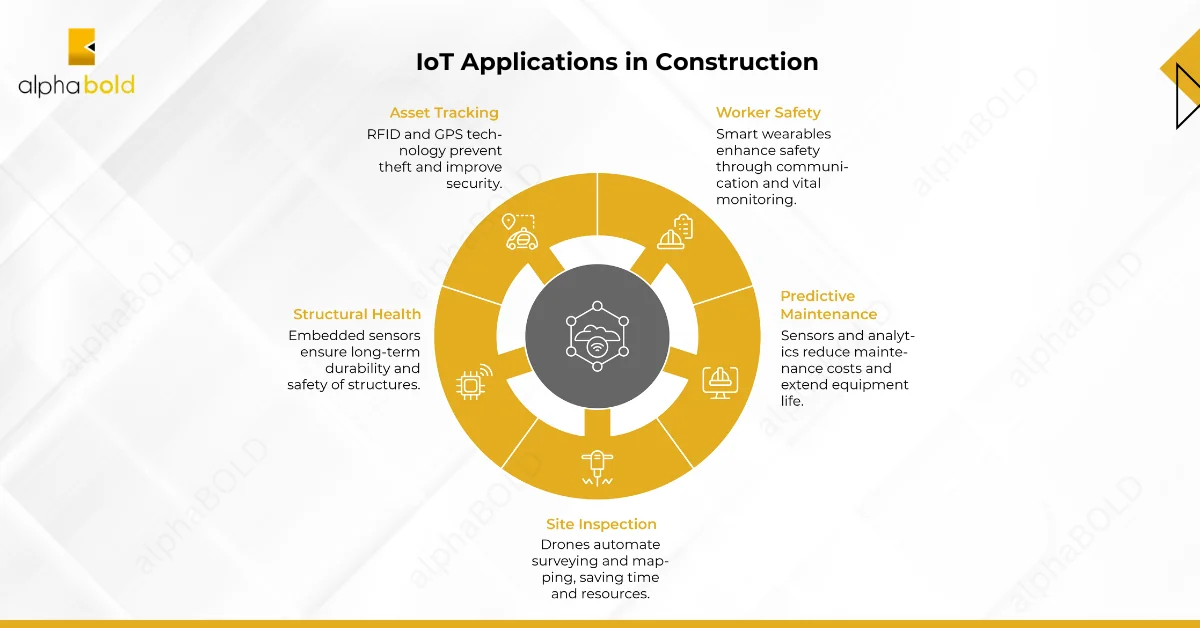
1. Smart Wearables for Worker Safety:
Connected wearables are being deployed to reduce on-site incidents and improve emergency response times.
- Monitor heart rate, fatigue levels, and worker movement
- Send instant alerts during falls or medical emergencies
- Detect exposure to hazardous gases or unsafe temperatures
- Enable two-way communication between workers and supervisors
These devices give safety managers real-time visibility and help prevent avoidable accidents.
2. Predictive Maintenance with IoT Sensors:
Sensors installed on heavy equipment track usage patterns and mechanical health to prevent costly breakdowns.
- Monitor engine temperature, vibration, and fuel consumption
- Detect abnormal performance before failure occurs
- Trigger automated maintenance alerts
- Extend machinery lifespan through condition-based servicing
This approach reduces downtime and keeps projects on schedule.
3. Drones for Site Inspection & Mapping:
Manual surveying is slow and resource-intensive. IoT-enabled drones automate inspections and data collection.
- Capture high-resolution aerial imagery
- Use LiDAR for terrain mapping and elevation modeling
- Track construction progress against project plans
- Conduct safety inspections in hard-to-reach areas
Teams gain faster insights without disrupting on-site work.
4. Smart Concrete & Structural Health Monitoring:
Embedded IoT sensors continuously monitor structural components during and after construction.
- Measure concrete temperature during curing
- Track moisture levels and strength development
- Monitor stress, load distribution, and structural shifts
- Detect early signs of cracks or structural weakness
This data supports quality assurance and long-term infrastructure reliability.
5. Real-Time Asset & Inventory Tracking:
Construction materials and equipment are high-value assets that require constant monitoring.
- Use RFID tags to track tools and materials
- Deploy GPS tracking on heavy machinery
- Monitor inventory levels in real time
- Reduce theft and material misplacement
Improved visibility reduces financial loss and keeps project workflows uninterrupted.
You may also like: 4 Sectors That Benefit from IoT Development
Move from Devices to a Fully Engineered IoT System
We architect your IoT environment end to end, from embedded firmware and advanced sensor integration to secure cloud connectivity and application development. We also implement AI-based automation and provide ongoing support to keep your system reliable and fully operational across active construction sites.
Talk to an ExpertConclusion
IoT in construction improves safety, increases efficiency, and reduces operating costs. With remote monitoring, automation, and predictive maintenance, firms gain better control over site operations and project timelines.
As construction becomes more digital, IoT adoption is no longer optional. Connected systems help secure worksites, allocate resources accurately, and support faster, data-backed decisions. By using real-time insights, companies reduce waste, improve coordination, and build more sustainable projects.
FAQs
IoT sensors can monitor energy consumption of machinery, lighting, and temporary site facilities in real time. This data allows teams to reduce unnecessary usage, optimize power distribution, and lower operational costs.
Yes. Connected devices can log safety inspections, track environmental conditions, and record equipment maintenance. These automated records simplify reporting and ensure compliance with safety and environmental regulations.
Wearables and location-tracking sensors provide insights into worker movement, task duration, and productivity patterns. Managers can use this data to schedule shifts efficiently and balance workloads across teams.
IoT enables real-time monitoring of prefabricated components during production, transportation, and assembly. This ensures quality control, reduces delays, and allows teams to track components from the factory to the site.
Yes. IoT devices can feed live data into BIM platforms, updating models with equipment status, structural health, and environmental conditions. This integration improves planning, project coordination, and predictive analytics.
Security depends on device configuration, network setup, and data encryption. Using secure cloud platforms, role-based access, and regular software updates reduces risks of unauthorized access or data breaches.