

Table of Contents
Introduction
Choosing between Microsoft Dynamics 365 and Salesforce remains one of the most critical decisions for organizations investing in CRM technology. As we move through 2026, both platforms have evolved dramatically with autonomous AI agents, advanced automation capabilities, and deeper ecosystem integrations that fundamentally transform how businesses operate.
This comprehensive comparison examines both platforms across key dimensions including AI capabilities, pricing, integration ecosystems, and the groundbreaking agent-based automation both vendors introduced in late 2025 and early 2026.
Overview
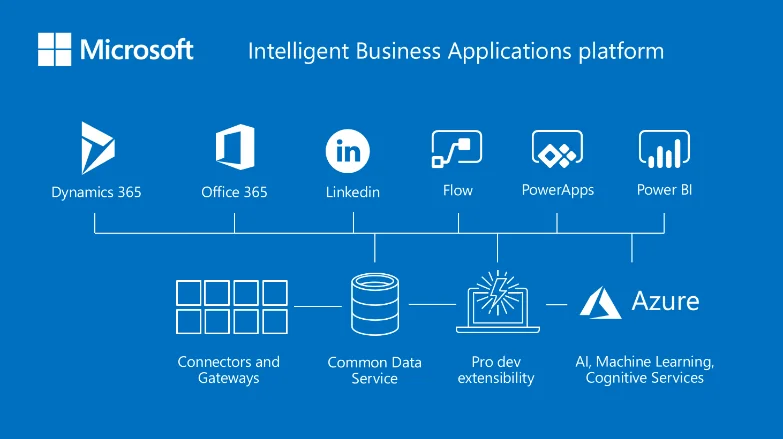
- Dynamics 365 Customer Engagement is part of Microsoft’s Dynamics 365 suite, integrating seamlessly with products like Office 365, Azure, and LinkedIn. This unified approach offers tools for sales, customer service, marketing, and field service.
- Salesforce is a powerful standalone CRM platform known for its customizability and extensive third-party integrations. It is a strong contender with unique features catering to various business needs.
2026 AI Revolution: Autonomous Agents Take Center Stage
Microsoft Copilot and AI Agents in Dynamics 365:
Microsoft’s 2025 Release Wave 2 (October 2025–March 2026) introduced transformative AI capabilities centered on autonomous agents and Copilot enhancements. The company has positioned Dynamics 365 as a “system of action” powered by agents, Copilot, and unified data.
Key 2026 AI Capabilities:
- Sales Development Agent: Launched via the Frontier Program in December 2025, this autonomous agent works 24/7 to build pipeline, nurture leads, and personalize outreach. Early adoption by Microsoft’s own sales team showed a 15.1% increase in lead-to-opportunity conversion rates.
- Model Context Protocol (MCP) Servers: Microsoft introduced MCP servers across Dynamics 365 in late 2025, providing standardized bridges between business data and AI agents. The Dynamics 365 ERP MCP server unlocks hundreds of thousands of ERP functions for real-time AI access, while the analytics MCP server (public preview December 2025) connects ERP data with AI-powered analytics.
- Work IQ Intelligence Layer: This foundational layer enables Microsoft 365 Copilot to understand individual users, their jobs, and company context. Work IQ analyzes emails, files, meetings, and work patterns to deliver personalized AI assistance across Word, Excel, PowerPoint, Outlook, and Teams.
- Agent 365 Control Plane: The governance hub for managing AI agents across the Microsoft ecosystem, providing security controls, access policies, and visual dashboards showing connections between people, agents, and data.
- Business Central 2026 Release Wave 1: Introduces purpose-built AI agents for Expense Management, Fulfillment, Accounts Payable, and Sales, moving toward what Microsoft calls “AIERP” (Artificial Intelligence Enterprise Resource Planning).
Technical Architecture:
- Agents built on Microsoft Dataverse with enhanced agentic capabilities
- Power Apps MCP server enables agents to trigger app functionalities (approvals, form submissions, data retrieval)
- Integration with leading CRM systems including Salesforce
- Voice mode support in Microsoft 365 Copilot for natural conversation
Salesforce Agentforce and Einstein Platform:
Salesforce rebranded Einstein Copilot as Agentforce in 2025, positioning it as the world’s “#1 digital labor platform.” The company has invested heavily in autonomous agent capabilities that take action across every channel.
Key 2026 AI Capabilities:
- Agentforce Service Agent: Autonomous AI agents that replace traditional chatbots by understanding context, analyzing full customer messages, and determining next actions without preprogrammed scenarios. Agents can upload images, analyze error codes, and seamlessly hand off to human agents with full context.
- Campaign Optimizer: Automates the complete campaign lifecycle using AI to analyze, generate, personalize, and optimize marketing campaigns based on business goals.
- Einstein Trust Layer: Comprehensive security framework with dynamic grounding, zero data retention, toxicity detection, and Agentforce Guardrails to prevent hallucinations, bias, and off-topic conversations.
- Agent Builder: Low-code platform for customizing out-of-the-box agents or building new agents using Flows, Prompts, Apex, and MuleSoft APIs. Supports integration with 20+ Model Context Protocol partners on the AgentExchange.
- Command Center: Complete observability solution for supervising and optimizing every AI agent, providing leaders with comprehensive tracking and performance insights.
Technical Architecture:
- Built on Salesforce Platform with Einstein 1 integration
- Access to OpenAI and Anthropic models (including GPT-5.1)
- MCP support for enterprise system integration
- Pre-built industry actions and hosted LLMs for regulated industries
Dynamics 365 Customer Engagement vs. Salesforce: Capabilities
1. User Interface and Experience:
| Microsoft Dynamics 365 | Salesforce |
|---|---|
|
Offers an intuitive and user-friendly interface. |
Salesforce’s Lightning Experience is highly customizable. |
|
Familiarity with Microsoft products makes navigation easier. |
New users might find it complex initially. |
|
Ensures consistency across devices, reducing the learning curve. |
Offers a rich interface with numerous customization options. |
2. Integration Capabilities:
| Microsoft Dynamics 365 | Salesforce |
|---|---|
|
Seamlessly integrates with Microsoft products. |
Known for its extensive third-party integrations. |
|
Ideal for organizations already using Office 365, Azure, or LinkedIn. |
Offers a wide array of integration options to suit various business needs. |
|
Enhances productivity and collaboration within the Microsoft ecosystem. |
Flexible in connecting with numerous external applications. |
Further Reading: How Microsoft Dynamics 365 CRM Benefits Small Businesses
Ready To Find the Perfect CRM Solution For your Business?
Contact AlphaBOLD today for a demo and discover how we can help you leverage the best of Microsoft Dynamics vs. Salesforce to drive your business forward.
Request a Demo3. Customization and Flexibility:
| Microsoft Dynamics 365 | Salesforce |
|---|---|
|
Provides robust customization options tailored to specific business needs |
Extensive customization capabilities. |
|
Advanced customizations might require technical expertise. |
Increased complexity and cost might accompany deeper customizations. |
|
Ensures flexibility to grow with your business. |
Suitable for businesses needing extensive and specific custom solutions. |
4. Pricing:
| Microsoft Dynamics 365 | Salesforce |
|---|---|
|
Microsoft uses a modular pricing structure, allowing organizations to license only needed capabilities: Core Applications (per user/month, annual commitment):
Additional Costs:
Attach Licensing: Microsoft’s attach licensing model allows users to access multiple modules at reduced per-user costs, providing savings for organizations needing cross-functional access. |
Salesforce offers tiered pricing within each cloud, with costs escalating as feature requirements grow: Sales Cloud (per user/month, annual commitment):
Service Cloud (per user/month, annual commitment):
Additional Costs:
|
5.Cost Analysis
Initial Cost: Salesforce appears less expensive at entry-level tiers.
Total Cost of Ownership: Dynamics 365 typically provides better long-term value due to:
- Lower storage costs (40% of Salesforce rates)
- Included sandboxes
- Attach licensing discounts
- Native integration reducing third-party integration costs
- Included Power Platform capabilities
Winner: Microsoft Dynamics 365 offers superior total cost of ownership, particularly for organizations planning to scale or requiring extensive storage and sandbox environments.
Further Reading: The Comprehensive Guide to CRM Software Selection
6. Strengths and Weaknesses:
| Microsoft Dynamics 365 | Salesforce |
|---|---|
|
Its strengths lie in its seamless integration with Microsoft products, user-friendly interface, robust AI and analytics capabilities, cost-effective modular pricing. |
Salesforce strengths is its features like highly customizable, extensive third-party integrations, strong AI capabilities |
|
Microsoft Dynamics 365’s weakness is its requirement for technical expertise for advanced customizations, but the long-term benefits outweigh this initial investment |
The weak points include steeper learning curve, higher cost, increased complexity for achieving deep integration. |
Discover the Perfect CRM Solution for your Business
Choosing between Microsoft Dynamics 365 vs. Salesforce can be challenging. Let AlphaBOLD's expert consultants guide you through this critical decision. We provide comprehensive consulting, implementation, and support to help you find the perfect CRM solution tailored to your business needs.
Request a DemoChoosing the Right CRM: The Role of Consultants
Choosing between Dynamics 365 Customer Engagement vs. Salesforce can be challenging. Each platform offers distinct advantages, and determining which is the best fit for your business requires a deep understanding of your specific needs and goals. This is where consultants from AlphaBOLD come in.
AlphaBOLD provides comprehensive consulting, implementation, and support services for both Dynamics 365 and Salesforce. With expertise in both platforms, AlphaBOLD can help you navigate the complexities of each option, ensuring you choose the CRM that aligns best with your business strategy. From initial assessment and planning to seamless implementation and ongoing support, AlphaBOLD is committed to helping you leverage technology for maximum business growth.
AlphaBOLD’s holistic approach includes understanding your business goals, recommending the ideal CRM products and configurations, and providing end-to-end support. Whether you need a customized Salesforce solution or a deeply integrated Dynamics 365 environment, AlphaBOLD’s experts are equipped to guide you every step of the way.
Further Reading: Migrate From Salesforce to Dynamics 365 in 60 Days Or Less
Transform your Business with the Right CRM Solution
Navigating the Microsoft Dynamics 365 vs. Salesforce decision? AlphaBOLD offers expert guidance to ensure you select the CRM that best fits your goals. Our tailored consulting and seamless implementation services will empower your business to achieve unparalleled growth and efficiency.
Get Expert HelpDecision Framework: Which Platform Is Right for You?
Choose Microsoft Dynamics 365 If:
- You’re heavily invested in Microsoft ecosystem – Organizations using Microsoft 365, Azure, Teams, or other Microsoft products gain maximum value from native integrations
- You need combined CRM and ERP – Single platform for customer relationships and back-office operations reduces integration complexity
- You prioritize total cost of ownership – Lower storage costs, included sandboxes, and attach licensing provide better long-term economics
- You value LinkedIn integration – B2B organizations benefit from built-in LinkedIn Sales Navigator capabilities
- You require flexible deployment – On-premises or hybrid options meet regulatory or infrastructure requirements
- You have Microsoft development skills – Existing .NET, C#, or Power Platform expertise accelerates customization
- You prefer integrated analytics – Power BI provides industry-leading business intelligence without additional integration
Choose Salesforce If:
- You need best-in-class CRM specialization – Pure focus on customer relationship management with mature, comprehensive features
- You require extensive industry solutions – Vertical-specific clouds offer deeper functionality for specialized industries
- You value the largest ecosystem – AppExchange provides unmatched variety of third-party applications and integrations
- You prioritize cloud-native architecture – Purpose-built multi-tenant cloud platform optimized for reliability and performance
- You need advanced marketing automation – Marketing Cloud offers enterprise-grade capabilities for complex campaign orchestration
- You’re not Microsoft-centric – Platform-agnostic approach works better for diverse technology stacks
- You want mature autonomous agents – Agentforce represents cutting-edge digital labor capabilities
Conclusion: The AI-Powered CRM Landscape of 2026
The CRM landscape has transformed dramatically as both Microsoft and Salesforce embrace autonomous AI agents, moving beyond traditional assistance to true digital labor. The choice between Dynamics 365 and Salesforce in 2026 is less about core CRM capabilities—both excel in this area—and more about ecosystem fit, AI strategy, and long-term vision.
Microsoft’s strength lies in its unified ecosystem spanning productivity, collaboration, ERP, and CRM, all powered by a consistent AI layer and governed through integrated security frameworks. Organizations already committed to Microsoft technologies will find Dynamics 365’s native integrations reduce complexity and total cost of ownership while providing enterprise-grade capabilities.
Salesforce’s advantage remains its laser focus on customer relationships, extensive industry solutions, and the industry’s largest ecosystem of partners and applications. The Agentforce platform represents a bold vision of autonomous digital labor, with sophisticated agents handling complex customer interactions without human intervention.
Both platforms are making significant R&D investments—Microsoft at $29.5 billion annually and Salesforce at $6.4 billion—ensuring continued innovation. The introduction of Model Context Protocol by both vendors signals an industry shift toward interoperable AI agents that can work across platforms and vendors.
Ultimately, the right choice depends on your organization’s existing technology investments, industry-specific requirements, budget considerations, and strategic vision for AI-powered operations. Both platforms offer compelling capabilities that will transform how businesses operate in 2026 and beyond.
Frequently Asked Questions
Yes. Both platforms offer integration capabilities. Microsoft’s Sales Development Agent specifically connects to Salesforce CRM data, and various third-party integration tools facilitate data synchronization between platforms.
Both platforms offer advanced AI capabilities. Microsoft emphasizes cross-application AI with Copilot and Work IQ, while Salesforce focuses on autonomous agents with Agentforce. The “better” choice depends on your specific use cases and existing technology stack.
Salesforce’s entry-level licenses start lower ($25/user/month), but Microsoft Dynamics 365 often provides better value when considering storage, sandboxes, and Power Platform capabilities included with core licenses.
Microsoft’s Power Platform is generally more accessible for citizen developers with low-code tools. Salesforce offers deeper CRM-specific customization but may require specialized Apex development skills for complex requirements.
Yes. Both vendors offer trial periods. Microsoft provides 30-day trials of Dynamics 365 applications, while Salesforce offers trials ranging from 14-30 days depending on the product.
Microsoft Dynamics 365 has advantages for B2B with native LinkedIn Sales Navigator integration. However, Salesforce offers comprehensive B2B solutions through Pardot and Account-Based Marketing features. Both serve B2B effectively.
Both platforms offer robust mobile experiences with offline capabilities. Dynamics 365 provides separate apps per module but integrates with Teams, while Salesforce offers a unified mobile app with comprehensive customization options.
Both platforms support data export and provide APIs for data migration. Third-party migration tools and consulting partners specialize in moving data between CRM systems, though the process requires careful planning.
Both meet stringent compliance requirements (HIPAA, GDPR, ISO 27001, etc.). Microsoft offers advantages through Azure Government Cloud for public sector, while Salesforce provides industry-specific clouds with built-in compliance frameworks.
Core CRM implementations typically take 3-6 months for either platform. Comprehensive deployments spanning multiple modules or clouds can take 6-12+ months. Both vendors recommend engaging implementation partners for complex projects.
Explore Recent Blog Posts