
Dynamics 365 and Microsoft Teams Integration for Hybrid Workforces

Introduction
Hybrid work is no longer a transitional phase or a flexible perk. It is the standard way modern organizations operate. Teams are distributed across locations, time zones, and work patterns, yet expectations around responsiveness, accountability, and customer experience continue to rise. The question businesses face in 2026 is not whether hybrid work can function, but whether their systems are designed to support it effectively.
The real challenge lies in execution. Conversations happen in meetings and chats, while customer data, tasks, and decisions live in separate business applications. This disconnect leads to delayed follow-ups, fragmented ownership, and constant context switching between tools. Over time, these small inefficiencies compound into missed opportunities, slower response times, and reduced visibility for leadership.
This is where collaboration without business context begins to break down. Communication platforms alone are not enough if teams cannot act on information in real time or align around a shared source of truth. Hybrid teams need collaboration tools that are tightly connected to the systems where work is tracked and decisions are recorded.
The Microsoft Teams and Dynamics 365 integration addresses this gap by bringing collaboration and business data together. Microsoft Teams serves as the central workspace for conversations and coordination, while Microsoft Dynamics 365 provides the structured system of record for customer relationships, service activity, and operational workflows. Together, they create an environment where discussions are directly connected to execution, enabling hybrid teams to move work forward without losing context.
Microsoft Teams: Transforming Communication
Hybrid work is no longer an adjustment phase or a flexible policy. It is how modern organizations operate by default. Teams are distributed across locations and time zones, yet expectations around speed, accountability, and customer experience continue to rise.
Today, over one million organizations use Microsoft Teams as their default messaging platform, making it the primary place where work conversations happen. But conversation alone is not execution.
Most hybrid teams struggle with the same operational friction:
- Discussions happen in meetings, chats, and channels
- Customer data and tasks live inside separate business systems
- Decisions are made in one place and acted on somewhere else
- Teams lose time switching between tools to stay aligned
This disconnect slows momentum. Follow-ups are delayed, ownership becomes unclear, and leaders lack real-time visibility into progress.
Collaboration without business context breaks down quickly in hybrid environments. Messaging platforms are effective only when teams can act on information without leaving the conversation or relying on manual updates.
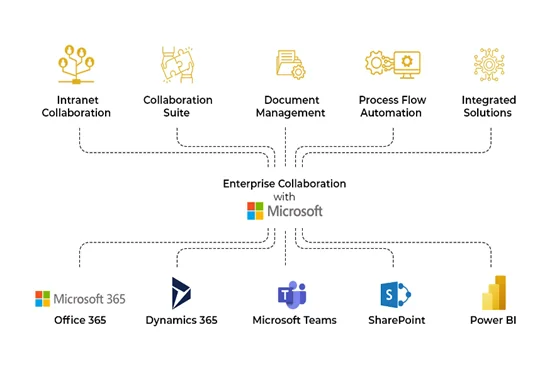
The Microsoft Teams and Dynamics 365 integration addresses this challenge by connecting collaboration directly to execution. Teams serves as the workspace for communication and coordination, while Microsoft Dynamics 365 provides the structured system of record for customer relationships, service activity, and operational workflows. Together, they reduce context switching and ensure that conversations translate into action.
Experience Seamless Collaboration Today
Discover how Microsoft Teams and Dynamics 365 integration can transform your remote and hybrid work environment. Enhance communication, streamline workflows, and boost productivity with cutting-edge tools.
Request a DemoBringing Dynamics 365 into the Flow of Collaboration
In hybrid environments, customer work rarely happens in isolation. Sales opportunities, service cases, and account decisions often require quick input from multiple stakeholders. When customer data lives only inside a CRM, teams are forced to leave conversations to check details, share screenshots, or manually summarize updates.
This slows collaboration and increases the risk of working with outdated information.
Microsoft Dynamics 365 is designed to be the system of record for customer relationships and operational activity. When it is brought into the same workspace where teams communicate, collaboration becomes more actionable.
Inside Microsoft Teams, teams can collaborate around live customer data instead of static copies. This enables:
- Sharing Dynamics 365 records directly in chats or channels
- Reviewing the latest customer details during active discussions
- Aligning quickly without switching between applications
- Reducing follow-up messages caused by missing or outdated context
Instead of conversations happening in one tool and execution happening in another, teams can stay aligned in real time. Discussions remain connected to the work itself, making it easier to move from agreement to action.
By bringing Dynamics 365 into the flow of collaboration, hybrid teams spend less time managing tools and more time progressing customer work with clarity and confidence.
Unlock the Full Potential of Remote Work
Empower your team to work efficiently from anywhere with Microsoft Teams and Dynamics 365 integration. Gain instant access to essential resources, improve collaboration, and stay ahead in a constantly changing world.
Request a DemoStructured Collaboration, Automation, and Governance
As hybrid teams scale, collaboration needs structure. Ad-hoc chats work for quick questions, but long-running work such as deals, implementations, or escalations requires conversations, files, and decisions to stay organized and traceable.
This is where structured collaboration becomes essential. By linking customer records to dedicated Teams channels, discussions, documents, and updates remain connected to the work itself instead of scattered across private chats and inboxes. Teams can collaborate over time without losing context, even as participants change.
Automation plays a key role in keeping this structure lightweight. With tools like Power Automate, routine follow-ups and updates can happen automatically, reducing reliance on manual reminders and side emails. This helps hybrid teams maintain momentum without adding administrative overhead.
Equally important is governance. In enterprise environments, collaboration must respect role-based access, data security, and visibility requirements. When collaboration is anchored to a system of record, organizations can ensure that the right people have access to the right information, while leadership maintains oversight without micromanaging day-to-day activity.
The Microsoft Teams and Dynamics 365 integration brings these elements together by supporting structured collaboration, automating routine workflows, and maintaining governance across distributed teams. The result is a hybrid work environment where collaboration remains flexible, but execution stays controlled and accountable.
Further Reading: Enterprise CRM Transformation with Dynamics 365: Scalable, Industry-Specific Solutions
Transform Your Business with Modern Tools
Stay competitive and adaptable by leveraging the power of Microsoft Teams and Dynamics 365 integration. Optimize your processes, enhance customer satisfaction, and achieve your business goals effectively.
Request a DemoWhere This Integration Delivers the Most Value
The real impact of connecting collaboration with business systems shows up in day-to-day execution. Hybrid teams benefit most when conversations, data, and next steps stay aligned without added process or constant follow-ups.
This approach delivers clear value across common business scenarios:
- Sales teams align faster on opportunities by reviewing customer details, discussing strategy, and agreeing on next steps without leaving the conversation
- Service teams resolve cases more efficiently by collaborating around shared context instead of relying on handoffs and email threads
- Cross-functional teams coordinate customer initiatives with fewer meetings and clearer ownership
- Managers and leaders gain visibility into progress without interrupting teams or requesting status updates
When collaboration is connected to a system of record, work moves forward with less friction. Teams spend less time tracking information and more time acting on it.
By bringing customer conversations and execution into the same workspace, organizations reduce delays, improve accountability, and create a more consistent experience for both employees and customers. In hybrid environments, this alignment is what turns collaboration into measurable progress.
Conclusion
Hybrid work succeeds when collaboration leads directly to action. Conversations alone do not move customer work forward unless they are connected to the systems where decisions, tasks, and outcomes are managed. As teams continue to operate across locations and time zones, reducing friction between discussion and execution becomes essential.
The Microsoft Teams and Dynamics 365 integration enables organizations to bring structure, visibility, and accountability into everyday collaboration. By connecting conversations with live customer data and workflows, teams can move faster, stay aligned, and maintain clarity without adding complexity.
In modern hybrid environments, the goal is not to add more tools, but to ensure that the tools teams already rely on work together. When collaboration and execution operate as one, organizations are better positioned to deliver consistent results and sustain productivity at scale.
To explore how Dynamics 365 compares with other solutions, check out our detailed analysis in the blog Microsoft Dynamics 365 vs Competing Solutions.
Explore Recent Blog Posts