
How AI in Dynamics 365 is Revolutionizing Vendor Selection for AEC Companies

Tayyab Ali
Table of Contents
Introduction
General contractors and construction companies manage hundreds of vendors, thousands of materials, and millions in procurement spent across complex, multi-year projects. Yet, for many AEC organizations, vendor selection still relies heavily on historical relationships, familiarity, and fragmented information, rather than a comprehensive view of performance and cost data.
What’s often overlooked is how much this decision-making landscape has changed. With AI capabilities now embedded across Microsoft Dynamics 365, vendor data is no longer static or siloed. Pricing history, delivery performance, quality outcomes, and project context can be analyzed together, at scale, directly within procurement and project workflows.
This blog examines how AI in Dynamics 365 facilitates more informed and consistent vendor selection for AEC companies by integrating performance and cost intelligence into everyday procurement decisions.
The Hidden Cost of "We've Always Used Them"
In AEC, vendor relationships matter. Familiar suppliers reduce risk, speed up procurement, and bring predictability to complex projects. The issue arises when familiarity becomes the primary decision filter, even as project requirements, pricing conditions, and vendor performance evolve over time.
Most AEC organizations already have the data needed to evaluate vendors more objectively. That information exists across ERP systems, project tools, spreadsheets, and email threads, but it rarely comes together in a way that supports day-to-day decisions.
As a result, opportunities are often missed, including:
- Pricing differences that go unnoticed across similar projects
- Performance patterns that only surface after delays or rework
- Negotiations based on anecdotal experience rather than historical evidence
Individually, these gaps may seem minor. Over time, they compound quietly across materials, trades, and project phases, eroding margins without a clear point of failure.
This is where AI in Dynamics 365 begins to matter. When vendor cost and performance data are analyzed continuously across projects, rather than reviewed manually or after the fact, procurement teams gain visibility that habit-based decision-making alone cannot provide.
AI-Powered Vendor Intelligence
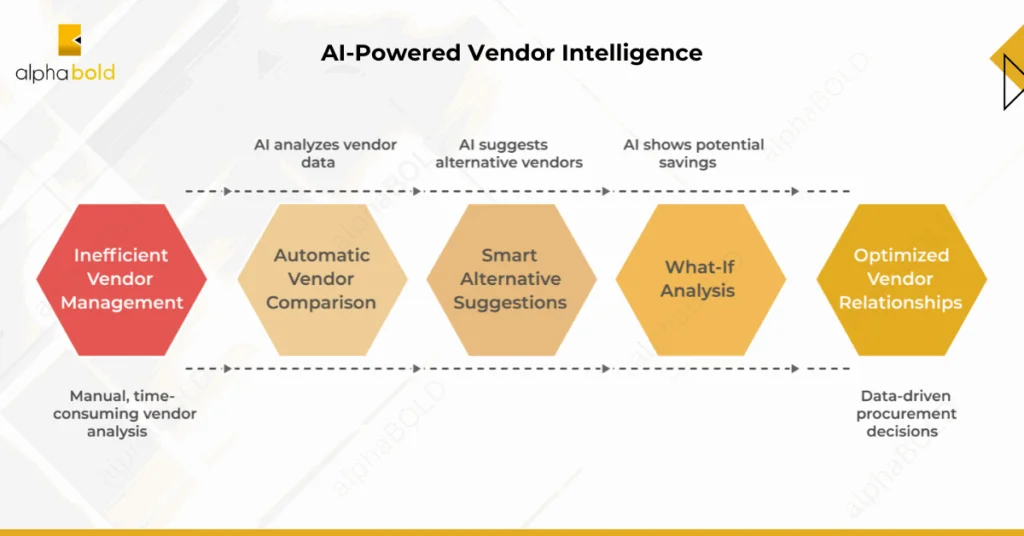
The growing availability of AI within enterprise platforms is changing how procurement teams can work with the data they already have. Rather than reviewing vendor performance after issues occur, AI enables continuous analysis across historical and active projects, making patterns visible earlier and more consistently.
This direction is reflected across the broader market. In its October 2025 analysis on procurement transformation, McKinsey notes that organizations are increasingly applying AI and advanced analytics to procurement to improve decision quality, efficiency, and value creation, moving procurement beyond manual review and toward data-driven decision support.
Within AI in Dynamics 365, this approach translates vendor intelligence into something practical and usable. Vendor data is evaluated continuously across dimensions such as:
- Historical pricing trends across projects
- Delivery reliability and timing
- Quality outcomes and rework patterns
- Geographic relevance to specific job sites
Instead of relying on static vendor records or one-off comparisons, procurement and project teams gain context-aware insights directly within their existing workflows. The result is not automation for its own sake, but better-informed vendor decisions supported by evidence rather than habit.
Move Vendor Selection From Habit to Insight
AI is already embedded in Dynamics 365. The real question is whether your procurement decisions are taking advantage of it. See how AI-driven vendor intelligence can bring cost and performance visibility directly into your AEC workflows without disrupting how teams work today.
Request a DemoHere's what it does
AI-powered vendor intelligence focuses on helping AEC teams evaluate vendors using consistent, project-relevant data rather than manual comparison or memory. Inside Dynamics 365, this means turning historical and active project data into decision support that fits directly into procurement workflows.
In practice, this includes:
1. Continuous Vendor Performance Analysis:
Vendor data is analyzed across projects to surface patterns that are difficult to detect manually, such as:
- Pricing trends across similar materials and scopes
- Delivery reliability over time and by location
- Quality outcomes reflected in rework or change orders
This allows teams to evaluate vendors based on how they actually perform across projects, not just how they performed last time.
2. Context-Aware Vendor Alternatives:
When procurement decisions are made, AI can highlight alternative vendors based on factors such as:
- Project location and logistical proximity
- Historical performance on similar job types
- Cost competitiveness within current market conditions
Rather than replacing judgment, this provides additional context at the point of decision.
3. Scenario and Lookback Analysis:
AI-enabled analysis makes it possible to review completed projects and understand how different vendor choices could have affected cost and performance. This historical insight supports:
- More informed negotiations
- Clearer vendor evaluations
- Better alignment between procurement and project teams
Together, these capabilities help move vendor selection from isolated decisions toward a more consistent, data-informed process across projects.
What’s real progress actually look like?
Explore how today’s construction, operations, and sales teams are using Microsoft tools to get clarity, speed, and control without the tech clutter.
Real Results: $1,500 Saved on California Roofing Project
On a recent roofing project in California, AI-enabled vendor analysis surfaced a clear pricing variance between two qualified suppliers offering comparable materials and scope.
Project-Level Cost Comparison:
| Vendor Option | Quoted Cost |
|---|---|
|
Existing vendor |
$11,000 |
|
Alternative vendor |
$9,500 |
|
Identified variance |
$1,500 |
On its own, a $1,500 difference may not appear material. The value becomes clearer when this insight is viewed in the context of multiple transactions.
When the same analysis was extended across historical purchases and similar material categories, comparable pricing differences appeared repeatedly. In several cases, alternative vendors also demonstrated stronger operational performance.
Pattern Observed Across Similar Projects with AI in Dynamics 365
| Evaluation Area | Observed Trend |
|---|---|
|
Pricing consistency |
Repeated variances across similar scopes |
|
Delivery performance |
More reliable timelines from select vendors |
|
Downstream impact |
Fewer issues tied to delays or rework |
|
Negotiation readiness |
Stronger historical evidence to support pricing discussions |
What matters is not one purchase, but visibility into repeatable patterns. When vendor pricing and performance data are evaluated collectively across projects, small variances become actionable insight rather than isolated findings.
Over time, this enables procurement and project teams to:
- Identify vendors that consistently deliver stronger value
- Support negotiations with historical cost and performance data
- Reduce reliance on one-off comparisons or anecdotal experience
Rather than replacing vendor relationships, this approach strengthens them by grounding decisions in data that scales across projects, not just individual POs.
Get a Demo Built for AEC
See how Microsoft tools can fit your field and project workflows. No generic pitch just practical use cases.
The Bottom Line
Construction margins are tight. A 10-15% reduction in material costs through smarter vendor selection can be the difference between a project’s profit and loss.
AI-powered vendor intelligence on Dynamics 365 gives AEC companies the data-driven insights they need to:
- Reduce procurement costs
- Improve vendor performance
- Make faster, better decisions
- Maintain strong vendor relationships while optimizing spend
The question isn’t whether you can afford to implement AI vendor intelligence, it’s whether you can afford not to.
FAQs
Traditional reporting tools rely on static dashboards and manual analysis, often reviewing vendor performance after issues occur. AI in Dynamics 365 evaluates vendor cost and performance data continuously across projects, surfacing patterns and insights directly within procurement workflows. This allows teams to assess vendors using historical and real-time context rather than one-off comparisons or spreadsheets.
No. AI-powered vendor intelligence is designed to support, not replace, established vendor relationships. It provides procurement and project teams with objective performance and cost insights that strengthen negotiations, improve transparency, and help ensure vendors are selected based on consistent value across projects rather than habit alone.
Most AEC organizations begin seeing usable insights once historical purchasing and project data is connected and analyzed. Because the approach builds on existing Dynamics 365 data and workflows, teams can start identifying pricing variances, performance patterns, and negotiation opportunities without a lengthy change management process.
Explore Recent Blog Posts