
Establishing AI Governance Frameworks in Your Organization

Caroline Mayou
Introduction
Artificial Intelligence (AI) is quickly altering industries, automating procedures, and improving the way we connect. From revolutionizing customer service with chatbots to optimizing supply chains with predictive analytics, AI’s applications are vast and varied. However, as AI becomes increasingly integrated into our daily lives, it brings with it a host of ethical, legal, societal, and organizational implications that must be carefully managed.
As Gartner states, “By 2025, AI will be a top investment priority for more than 30% of CIOs, but without proper governance frameworks, organizations may face significant ethical and operational risks.”
However, the integration of AI into business operations comes with many risks. Potential issues such as privacy violations, biased algorithms, and the misuse of AI for malicious purposes are significant concerns. Without proper oversight, these risks can lead to severe consequences, including loss of customer trust, legal repercussions, and harm to an organization’s reputation.
Establishing a robust AI governance framework is essential to mitigate these risks. Such a framework ensures transparency in AI processes, holds stakeholders accountable, and promotes the responsible development and deployment of AI systems. By employing clear standards, policies, and regulations businesses can protect themselves against potential hazards and utilize AI’s capabilities to drive innovation.
At AlphaBOLD, we understand the critical importance of AI governance in today’s business landscape. Our commitment to excellence in AI implementation is reflected in our comprehensive eBook, “Preparing Your Business for an AI Implementation: The Ultimate Checklist.” This resource provides detailed guidance on establishing effective AI governance frameworks, helping businesses navigate the complexities of AI deployment responsibly and ethically.

What is an AI Governance Framework and Why is it Crucial?
An AI governance framework is a structured set of regulations, policies, standards, and best practices designed to regulate the development, application, and use of AI technologies. This framework serves as a comprehensive guide to ensure that AI systems are developed and utilized ethically, responsibly, and in accordance with legal standards. By establishing clear guidelines and processes, an AI governance framework helps organizations manage the complexities and potential risks associated with AI, while also maximizing its benefits.
Key purposes of an AI governance framework include:
- Ethical Development: Ensuring AI systems are designed and implemented in ways that adhere to ethical principles and societal values.
- Responsible Usage: Promoting responsible use of AI technologies to prevent misuse and mitigate potential harms.
- Legal Compliance: Ensuring adherence to relevant laws and regulations to avoid legal penalties and protect organizational integrity.
- Trust and Accountability: Building trust among stakeholders by demonstrating accountability and transparency in AI processes.
Key Components of an Effective AI Governance Framework
Implementing a successful AI governance framework needs careful planning and execution of numerous interlinked mechanisms. Here’s how you can integrate these essential elements into your organization’s AI strategy:
Establish Ethical Guidelines:
Ensure Data Security:
Maintain Transparency of AI Mode’s Purpose:
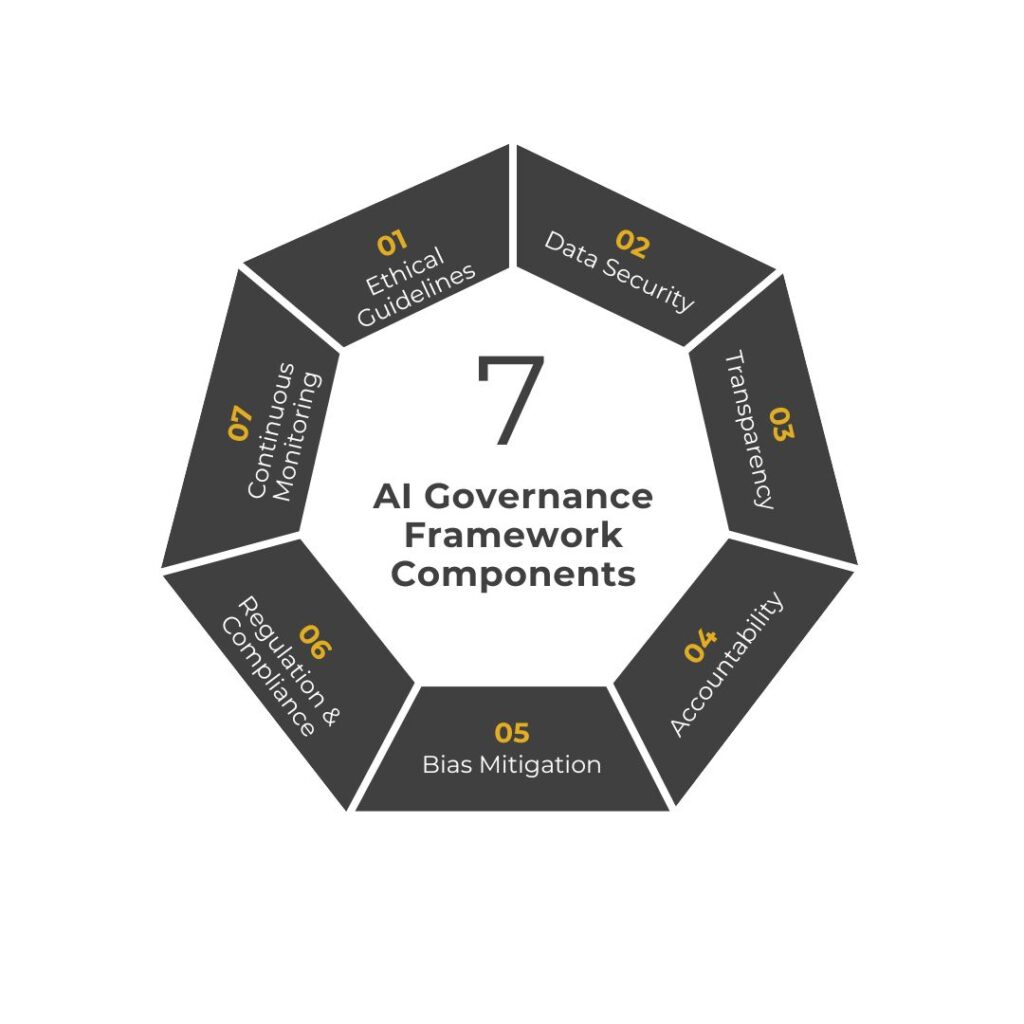
Demonstrate Accountability:
Mitigate Bias and Discrimination:
Mitigating bias and discrimination involves developing comprehensive strategies to identify and reduce biases in AI systems. Using diverse and representative data sets for training AI models helps minimize bias. Regularly testing AI systems for biases and adjusting algorithms as needed is crucial for maintaining fairness. Furthermore, including diverse teams in AI development allows for versatile perspectives, which can further reduce biases and promote inclusive design.
By 2025, AI will be a top investment priority for more than 30% of CIOs, but without proper governance frameworks, organizations may face significant ethical and operational risks.
Gartner
Regulation and Compliance:
Ensuring legal compliance involves staying updated with current and emerging data protection laws and AI regulations. Developing internal policies that align with legal requirements and best practices is essential for maintaining compliance. Regular compliance audits help verify adherence to these standards and identify areas needing improvement, thus safeguarding the organization against legal penalties.
Continuous Monitoring and Assessment:
Steps to Building an AI Governance Framework
Step 1: Define Your AI Vision and Strategy
Step 2: Establish a Governance team
Step 3: Develop Policies and Guidelines
Step 4: Implement Monitoring and Reporting Mechanisms
To ensure the effectiveness and compliance of AI systems, implement robust monitoring and reporting mechanisms. Set up tools that continuously monitor AI performance and detect any deviations or issues. Define metrics for success and key performance indicators (KPIs) to measure the impact and effectiveness of AI initiatives. Regular reporting helps in maintaining transparency, identifying areas for improvement, and ensuring that AI systems operate within the defined ethical and regulatory boundaries.
Step 5: Ensure Continuous Training and Education
Step 6: Foster an Ethical AI Culture
Common Pitfalls to Avoid with AI Governance
Lack of Clear Vision and Strategy:
Inadequate Stakeholder Involvement:
Ignoring Ethical Considerations:
Prioritize ethical considerations in AI governance to avoid biased systems and ensure transparency. Ignoring these issues can undermine trust and cause harm. Establish and follow ethical guidelines that emphasize fairness, accountability, and transparency. Regularly review and update these guidelines to reflect evolving ethical standards and societal expectations.
Read more: Build a FAQ chatbot with QnA Maker and Microsoft Bot Framework

Insufficient Monitoring and Reporting:
Neglecting Continuous Education:
Conclusion
Explore Recent Blog Posts



Related Posts