

How Dynamics 365 Sales Eliminates Friction Between Sales and Marketing Teams

Rosalinda Valenzuela
Table of Contents
Introduction
Sales and marketing are expected to operate as a single revenue engine, yet many organizations still run them as loosely connected functions. Marketing generates demand. Sales converts opportunities. When definitions, visibility, and qualification criteria are misaligned, friction follows. Leads stall, context is lost, and revenue predictability declines.
The issue is rarely effort. It is system design. Fragmented tools, disconnected data, and manual handoffs create gaps that slow momentum.
Aligning sales and marketing with Dynamics 365 embeds collaboration directly into the CRM architecture. Dynamics 365 Sales acts as the operational bridge between demand generation and deal execution, centralizing engagement history, standardizing qualification, and structuring handoffs within a shared data environment.
Instead of operating in parallel, both teams work from unified pipeline visibility and shared objectives, transforming coordination into a scalable revenue system.
The Gap Is Caused by Fragmented Visibility
Sales and Marketing rarely disagree on goals. Both want predictable revenue growth. The friction begins when each team operates from partial visibility.
Marketing sees campaign engagement, content interaction, and lead scores. Sales sees pipeline stages, opportunity values, and forecast commitments. When these insights live in separate systems or disconnected modules, neither team has a complete picture of the customer journey. Decisions are made in isolation, and performance metrics become misaligned.
Fragmented visibility creates operational blind spots:
- Sales engages prospects without full marketing context.
- Marketing measures success without clear revenue attribution.
- Forecasts rely on incomplete engagement data.
- Lead quality debates replace data-driven accountability.
The issue is not communication. It is architecture. When systems do not share a unified data foundation, collaboration depends on manual updates, exported reports, and reactive follow-ups.
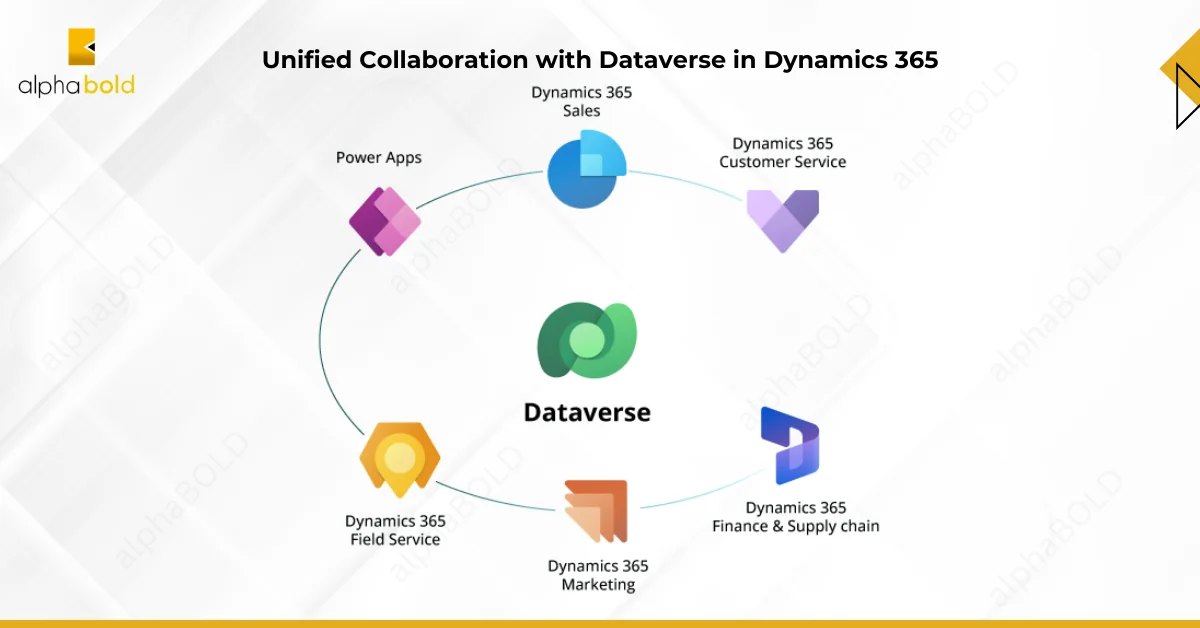
This is where the design of Microsoft Dataverse becomes comes in. As the shared data layer across Dynamics 365 Sales, Dynamics 365 Customer Service, Dynamics 365 Field Service, and other Dynamics applications, it eliminates system-level silos by centralizing customer and engagement data in a single environment.
Instead of each function maintaining its own version of the truth, every interaction, update, and opportunity record is written back to the same data model. Sales sees marketing engagement in context. Marketing sees pipeline progression tied to real revenue outcomes. Leadership gains cross-functional visibility without reconciling reports from multiple tools.
The image below illustrates how Dataverse serves as the connective foundation across the Dynamics ecosystem, enabling unified collaboration rather than fragmented execution.
Dynamics 365 Sales Creates Shared Revenue Intelligence
A unified data environment is only the starting point. True alignment happens when shared data is transformed into actionable insight that guides both teams toward measurable outcomes.
Dynamics 365 Sales consolidates customer interactions, campaign engagement, and opportunity activity into a connected revenue view. Instead of Marketing analyzing engagement in isolation and Sales managing pipeline progression separately, both functions operate within a synchronized lifecycle model.
Every interaction strengthens that intelligence layer:
- Campaign engagement informs opportunity prioritization.
- Sales activity feeds back into marketing attribution.
- Customer responses refine qualification models over time.
Aligning sales and marketing with Dynamics 365 becomes practical when both teams rely on the same engagement signals, scoring logic, and pipeline data to guide decisions. Subjective debates about lead quality are replaced with shared, measurable indicators.
Because these insights are embedded directly into daily workflows, alignment does not depend on additional meetings or manual reporting. Sales sees buying intent in context. Marketing sees revenue impact tied to campaigns. Leadership gains cross-functional visibility across the entire revenue lifecycle.
The outcome is not simply better reporting. It is a coordinated revenue system driven by shared intelligence rather than disconnected metrics.
Explore the Power of Dynamics 365 Sales with AlphaBOLD
See how AlphaBOLD can customize Dynamics 365 to fit your unique business needs and drive measurable results.
Request a ConsultationFurther Reading: Microsoft Dynamics 365 Sales Pipeline Optimization
AI-Driven Qualification and Lead Prioritization
Shared visibility and intelligence lay the foundation, but effective alignment depends on how leads are qualified and prioritized. When qualification relies on static rules or manual judgment, inconsistency quickly reappears between Marketing and Sales.
Dynamics 365 Sales enhances qualification through predictive scoring and behavior-based insights that analyze engagement patterns, historical conversion data, and opportunity signals. Instead of passing every lead into the pipeline, the system identifies which accounts demonstrate meaningful buying intent and surfaces them for focused follow-up.
This approach shifts qualification from opinion to evidence:
- Engagement signals are evaluated against historical win patterns.
- Scoring models adapt as new revenue data enters the system.
- High-potential opportunities are prioritized based on measurable indicators.
Aligning sales and marketing with Dynamics 365 becomes more effective when both teams operate from a shared scoring framework rather than separate definitions of readiness. Marketing gains clarity on what qualifies as sales-ready demand. Sales receives leads supported by contextual data, not just campaign activity.
By embedding AI-driven prioritization directly into the CRM workflow, organizations reduce wasted effort, accelerate response times, and increase conversion consistency. Lead management moves from reactive filtering to structured, intelligence-based decision-making that strengthens the entire revenue lifecycle.
Structured Handoffs and Workflow Automation
Even with shared visibility and intelligent qualification, alignment can break down at the point of transition. When lead handoffs rely on email threads, spreadsheets, or informal coordination, delays and accountability gaps quickly reappear.
Dynamics 365 Sales reduces this risk through structured routing and workflow automation. Leads can be assigned automatically based on territory, industry specialization, opportunity size, or workload balancing rules. Follow-ups, service-level expectations, and task creation are embedded directly into the CRM process, eliminating ambiguity during transfer.
This structure ensures:
- Sales receives complete engagement context at assignment.
- Marketing maintains visibility into opportunity progression.
- No qualified lead is delayed due to unclear ownership.
Aligning sales and marketing with Dynamics 365 becomes operational when transitions are enforced by system logic rather than dependent on manual coordination.
In practice, organizations that standardize their handoff processes and automate lead routing see fewer dropped opportunities, faster response times, and more consistent accountability across teams. Structured automation replaces informal practices with governed workflows that scale with revenue demands.
When automation controls the shift from marketing engagement to active opportunity management, revenue velocity increases, response times shorten, and accountability becomes measurable. Handoffs stop being friction points and start functioning as controlled transitions within a coordinated revenue system.
Embedded Collaboration Across Daily Workflows
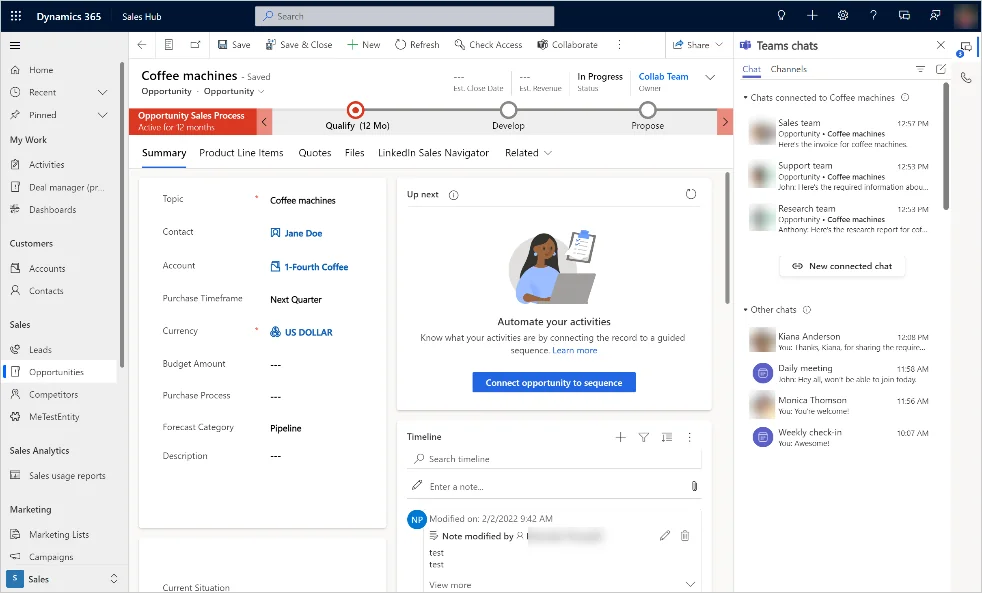
Technology alignment fails when collaboration requires additional effort. If Sales and Marketing must switch systems, schedule extra meetings, or manually summarize activity to stay aligned, friction inevitably returns.
Dynamics 365 Sales extends collaboration directly into everyday tools through deep integration with Microsoft Teams and AI-powered assistance via Microsoft Copilot. Opportunity discussions, account updates, and customer context can be accessed within communication workflows rather than requiring separate reporting or data reconciliation.
This embedded collaboration model enables:
- Real-time visibility into deal discussions within Teams channels
- AI-generated summaries of customer interactions and opportunity progress
- Automated capture of meeting insights directly into CRM records
- Context-rich communication without duplicating effort
Aligning sales and marketing with Dynamics 365 becomes sustainable when collaboration is built into how teams already work. Marketing can view pipeline progression without requesting updates. Sales can access campaign engagement context without switching systems. Leadership can observe cross-functional momentum without reconciling multiple reports.
The result is not simply integration. It is operational continuity. Communication, intelligence, and execution exist within a connected environment, reducing coordination overhead and strengthening revenue predictability across the organization.
Further Reading: How Microsoft Dynamics 365 Sales Insights Empowers The Sales Teams
Connect with AlphaBOLD Dynamics 365 Consultants
Get tailored advice on aligning your sales and marketing teams with Microsoft's integrated CRM solutions.
Request a ConsultationConclusion
Sales and Marketing alignment is not a communication problem. It is a structural one. When visibility is fragmented, qualification criteria differ, and handoffs depend on manual coordination, revenue performance becomes inconsistent and difficult to forecast.
Dynamics 365 Sales addresses this by connecting engagement data, opportunity management, qualification logic, automation, and collaboration into a unified operational model. Instead of functioning as parallel departments, Sales and Marketing operate from shared intelligence and governed workflows embedded directly within the CRM environment.
Aligning sales and marketing with Dynamics 365 transforms collaboration from a reactive effort into a system-driven capability. Data flows seamlessly across teams, decisions are guided by measurable signals, and transitions between functions are structured rather than improvised.
When alignment is built into the revenue architecture itself, accountability strengthens, pipeline visibility improves, and growth becomes more predictable and scalable.
Explore Recent Blog Posts




Related Posts