
The Omnichannel Experience: Engaging Customers With Dynamics 365

Introduction
Customer expectations have expanded beyond single-channel interactions, and enterprises can no longer rely on fragmented service models. Dynamics 365 Omnichannel has evolved into a strategic foundation for organizations that need to unify customer engagement across service, sales, digital commerce, and field operations. For C-level leaders, this shift is no longer about adopting new channels but about reshaping how the business operates, how data flows, and how teams collaborate around the customer journey.
As Microsoft moves toward deeper automation, AI-driven agent assistance, and unified interaction management, the omnichannel model is transitioning from a technology project to an enterprise-wide transformation. The companies seeing measurable results today are those that approach omnichannel not as a feature set, but as a long-term operating model supported by clean data, disciplined processes, and cross-functional readiness.
What Experienced Consultants Want Every Buyer to Know
A decade of implementing Dynamics 365 Omnichannel teaches one consistent lesson: most failures are not technical. They happen because organizations treat omnichannel as a software purchase instead of an operational shift. Senior consultants agree that success depends more on readiness, data discipline, and change management than on features or licenses.
The first reality is that omnichannel exposes existing organizational gaps. These may include siloed service teams, inconsistent customer data, disconnected commerce systems, or undefined customer journey processes. Technology does not correct these issues. It simply makes them more visible. A mature implementation begins with unifying customer records, clarifying routing rules, defining service levels, and aligning digital, contact center, and field workflows.
Consultants also strongly advise against early customization. Microsoft provides robust out-of-the-box capabilities for agents, routing, AI assistance, and channel orchestration. Over-engineering these before go-live creates instability, higher costs, and complexity that does not add value. High-performing organizations adopt a configure first and customize later mindset.
Here are core principles seasoned experts emphasize:
- Unify customer data before discussing channels or AI.
- Use out-of-the-box capabilities for your first release.
- Train agents and supervisors early, not after go-live.
- Treat routing, automation, and KPIs as living components that evolve.
Finally, long-term ROI depends on continuous optimization. Real omnichannel maturity develops over several months as supervisors refine queues, adjust automation, expand knowledge bases, and align metrics to new workflows.
Explore our Dynamics 365 Customer Service consulting services.
Assess Your Omnichannel Readiness
Ensure your customer data, routing processes, and engagement workflows are aligned for a unified experience. Evaluate your current state and identify the steps needed to build a scalable omnichannel model.
Request a DemoDynamics 365 Omnichannel in 2026: What Is Actually Changing
As Microsoft shifts toward AI-first customer engagement, the 2026 direction for Dynamics 365 Omnichannel is centered on automation, consolidated admin experiences, and streamlined supervision. Dynamics 365 Contact Center is becoming the core engine for voice, digital messaging, routing, and real-time agent insights. Microsoft’s Release Wave 2 outlines new capabilities scheduled through early 2026 including enhanced proactive engagement, improved routing, and expanded supervisor monitoring tools. These updates are formally documented in the Microsoft Release Plan.
A critical part of the 2026 landscape is the retirement of legacy components. Microsoft is deprecating the classic Omnichannel for Customer Service administration area and requiring all customers to use the modern Customer Service admin center. Older routing rule interfaces, classic channel configuration pages, and the previous unified interface agent workspace are also being phased out. Organizations still operating on these legacy components will need to transition to supported experiences to avoid disruption.
Here are the key changes buyers must prepare for:
- Greater dependency on Dynamics 365 Contact Center for voice and digital channels
- Required migration to the modern Customer Service admin center
- Retirement of classic channel setup screens and legacy routing tools
- Transition away from the old unified interface agent workspace
- Strengthening of AI-driven routing, engagement, and supervisor visibility
- Consolidation of overlapping capabilities into a single, supported platform
Microsoft’s direction is clear. The future of omnichannel is centralized, AI-assisted, and built on modern workspaces. Any organization planning an upgrade or new implementation in 2026 should align with these supported components to ensure long-term stability.
Further Reading: Optimizing Agent Productivity with Dynamics 365 Contact Center: A Copilot-first Cloud Contact Center
How to Evaluate Whether Your Organization Is Truly Ready for Omnichannel
Many organizations decide to adopt Dynamics 365 Omnichannel before they assess whether their internal structure, data, and processes can support it. A successful omnichannel implementation depends on operational maturity, not just technology selection. Before investing, leadership teams should conduct a readiness review that examines how well the business can support unified engagement across digital, voice, in-store, and service channels.
The most important readiness factor is data quality. Omnichannel depends on consistent customer identifiers, clean interaction histories, and unified case data. If customer information exists in multiple systems with conflicting formats, the experience will remain fragmented regardless of the platform.
The second factor is cross-functional alignment. Omnichannel only works when digital, contact center, store operations, sales, and field teams follow shared processes for routing, handoffs, KPIs, and customer context. Without this alignment, channel switching becomes inconsistent and agent performance is difficult to measure.
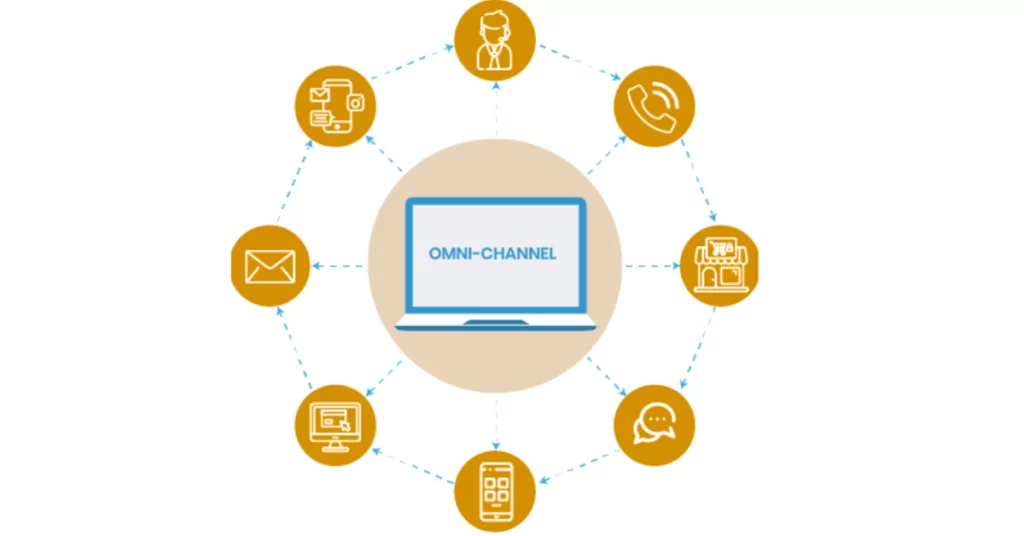
To help decision-makers evaluate their current state, here are core readiness indicators:
- Customer data is consistent, centralized, and accessible across departments
- Routing rules, SLAs, and escalation paths are documented and understood
- Digital, voice, and in-person teams follow a coordinated service process
- Supervisors have clear reporting expectations and role-specific dashboards
- Integrations with commerce, CRM, and case management systems are reliable
- Training plans exist for agents, supervisors, and administrators
- Leadership supports continuous optimization after go-live
Organizations that meet these criteria build a stronger foundation for long-term omnichannel success.
Build a Practical Omnichannel Roadmap
Plan a phased implementation that strengthens customer engagement without overcomplicating your operations. See how a structured rollout helps drive adoption, stability, and measurable results.
Request a DemoA Practical Implementation Path That Works
Successful enterprise deployments of Dynamics 365 Omnichannel follow a structured and realistic sequence. High-performing organizations avoid the temptation to activate every channel at once. Instead, they build a stable foundation, validate core processes, and expand in controlled phases. This approach protects teams from change fatigue and ensures that routing, data, and agent workflows remain reliable during scale-up.
The implementation journey begins with a preparation phase that focuses on data, governance, and licensing. Clean customer records, clear ownership of routing rules, and correct license assignment reduce risk once channels go live. This phase also includes mapping customer journeys and confirming how different teams will coordinate during digital and voice interactions.
The next phase focuses on one or two priority channels, typically chat and voice. These channels provide fast validation of routing logic, agent experience, and supervisor oversight. Insights from this early stage guide improvements before additional channels are introduced.
To support clarity, here is a proven phase structure used by experienced delivery teams:
- Phase 0: Data readiness, governance models, licensing review
- Phase 1: Core setup for chat and voice, supervisor dashboards, initial automation
- Phase 2: Expansion to SMS, social messaging, and email queues
- Phase 3: Integration with commerce, CRM, and case management systems
- Phase 4: AI-driven routing, knowledge enhancements, proactive engagement
- Phase 5: Continuous optimization for KPIs, quality, and agent productivity
Enterprises that scale gradually achieve stronger adoption and long-term performance
What Success Looks Like Once Omnichannel Is Live
When Dynamics 365 Omnichannel is deployed correctly, success becomes visible across measurable operational, customer, and agent outcomes. Mature organizations avoid judging performance on day one and instead track improvements over a ninety day period as teams stabilize, supervisors adjust routing rules, and automation becomes more accurate.
One of the clearest indicators of success is a reduction in customer effort. When channels are unified, customers do not need to repeat information, switch platforms to resolve issues, or navigate inconsistent processes. This reduces friction and increases trust. Internally, agents benefit from complete customer context and more consistent workflows, which leads to faster resolution and fewer escalations.
Supervisors also begin to see reliable performance patterns. With consistent routing and centralized reporting, leadership can diagnose bottlenecks, refine queues, and track improvement over time.
For quick reference, here are the outcomes that reflect a healthy implementation:
- Lower average handle time and fewer repeated contacts
- Higher first contact resolution across all channels
- Smooth channel switching without data loss or customer frustration
- Improved agent productivity due to centralized context
- Consistent KPI reporting across digital and voice channels
- Reduced manual workload through targeted automation
- More predictable supervisor oversight and queue management
These outcomes signal that both technology and operations are aligned.
AlphaBOLD’s Role: How a Consulting Partner Strengthens Omnichannel Success
A modern omnichannel implementation requires more than technical configuration. It demands a consulting partner that understands business processes, data dependencies, organizational change, and the full customer engagement lifecycle. AlphaBOLD supports Dynamics 365 Omnichannel deployments by aligning technology with real operational needs and building a roadmap that reflects how customers interact across digital, voice, in-store, and field channels.
AlphaBOLD begins with a clear assessment of the organization’s data quality and current engagement model. This ensures that customer records, routing rules, and reporting expectations are defined before channels go live. The team then guides organizations through a structured implementation path that emphasizes out-of-the-box capabilities, stable routing, and measurable KPIs. This protects the project from unnecessary complexity and encourages long-term scalability.
AlphaBOLD also supports teams after launch through optimization cycles that help supervisors refine queues, improve automation, and strengthen agent performance. This post-go-live support is critical for organizations that are shifting to a unified engagement model for the first time.
Here is what AlphaBOLD’s approach typically includes:
- Data readiness and governance models
- Clear customer journey mapping and routing design
- Stable deployment of priority channels
- Integration with CRM, commerce, and case systems
- AI-driven enhancements aligned to operational goals
- Continuous optimization for adoption and KPI improvement
This consulting-led approach helps organizations build a sustainable omnichannel foundation.
Modernize Customer Engagement with AlphaBOLD
Prepare your service teams for AI-driven routing, consolidated workspaces, and the evolution of Dynamics 365 capabilities.
Explore how modern tools can enhance performance across digital, voice, and in-person channels.
Request a Demo
Conclusion
The shift toward unified customer engagement is accelerating, and organizations that adopt a structured, data-driven approach are seeing measurable improvements in service quality, efficiency, and customer loyalty. Dynamics 365 Omnichannel provides a strong platform for this transformation, but technology alone is not enough. Real success comes from operational readiness, cross-team alignment, disciplined data practices, and a partner that understands how to translate omnichannel strategy into day-to-day execution.
As customer expectations continue to rise, now is the time for enterprises to strengthen their engagement model, modernize their service operations, and prepare for the AI-driven capabilities shaping 2026 and beyond.
If you would like to evaluate your organization’s omnichannel readiness or plan a practical implementation roadmap, our team is available to help.
FAQs
Organizations are ready when customer data is unified, routing rules are documented, and cross-functional teams follow consistent service processes. Readiness also requires reliable integrations with CRM, commerce, and case systems, along with defined KPIs and a clear training plan for agents and supervisors. Without these foundations, the platform will not deliver its full value.
Omnichannel for Customer Service provides digital messaging, chat, and case management, while Dynamics 365 Contact Center adds enterprise-grade voice, real-time supervision, and AI-driven interaction management. Microsoft is consolidating capabilities into the Contact Center workspace, so organizations planning for 2026 should standardize on the modern admin experiences and agent tools that Contact Center supports.
Dynamics 365 Omnichannel offers a broad set of capabilities, including unified customer context, configurable routing, digital messaging, live chat, SMS, social channels, voice integration, AI-assisted agent workflows, knowledge integration, advanced supervisor dashboards, proactive engagement, and seamless connection with CRM, case management, and commerce systems. These features work together to help enterprises deliver consistent, data-driven customer experiences across every channel.
Explore Recent Blog Posts




Related Posts