
Industry-Specific CRM Solutions: Tailoring CRM to Your Sector

Caroline Mayou
Table of Contents
Introduction
Customer Relationship Management (CRM) is no longer just a system that stores customer data. It now sits at the center of how businesses manage sales, service, and customer experience across the organization.
CRM expectations have changed significantly. Businesses now expect faster adoption, less manual work, and better decision support inside the system itself. This shift has been driven largely by AI-assisted capabilities within platforms like Microsoft Dynamics 365, where tools such as Copilot now support users in day-to-day CRM activities rather than just reporting outcomes.
At the same time, customer expectations continue to rise. Organizations are no longer judged only on having a CRM in place, but on how effectively it improves real business outcomes after go-live.
This is where industry-specific CRM design becomes important.
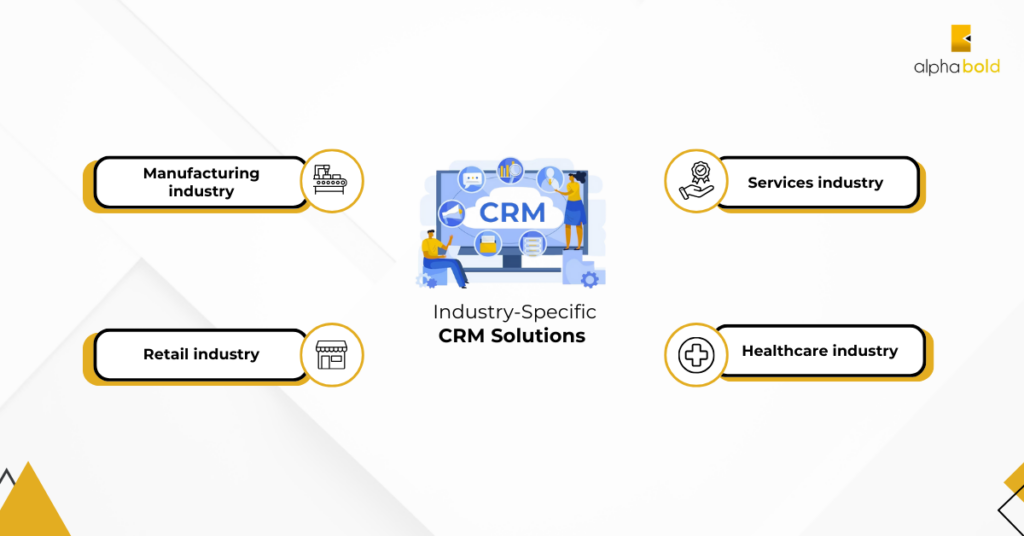
Microsoft Dynamics 365 is not a fixed system. It is built to adapt across industries such as manufacturing, retail, healthcare, and services. Each sector has different operational pressures, and the platform allows organizations to align CRM capabilities with those specific needs rather than forcing a generic model.
This blog explains how Dynamics 365 applies across industries.
How Can CRM for Manufacturing Manage Complex Operations and Customer Cycles?
Manufacturing businesses deal with long sales cycles, multiple stakeholders, and tightly connected operations across sales, production, supply chain, and service. A CRM only adds value when it reflects this complexity instead of oversimplifying it.
Sales and Opportunity Management:
Manufacturers need structured tracking for complex deals and multi-stage opportunities. Forecasting accuracy is also critical for production planning and inventory control.
- Effective Lead and Opportunity Management: Manufacturers need robust systems to track sales leads and opportunities, ensuring no potential customer is missed.
- Accurate Sales Forecasting: Predicting sales trends is crucial for planning production and managing inventory.
- In-depth Relationship Analytics: Understanding customer interactions is key to building stronger relationships and enhancing sales strategies.
Customer Service and Support:
Customer Service teams require visibility into customer history, equipment issues, and prior interactions to reduce resolution time and improve consistency.
- Streamlined Customer Support: A platform that efficiently handles customer inquiries and issues is essential for maintaining high satisfaction levels.
- Actionable Service Insights: Leveraging AI to analyze service patterns and feedback helps manufacturers refine their customer service continuously.
- Consistent Omnichannel Engagement: Seamlessly engaging customers across various platforms is crucial for a cohesive service experience.
Field Service Operations:
Scheduling, dispatching, and technician coordination must be tightly managed to avoid delays and reduce operational costs.
- Effective Service Scheduling and Dispatch: Manufacturers require efficient management of field service schedules for timely service delivery.
- Resource Optimization: Utilizing resources in the field efficiently is vital to reduce costs and enhance service quality.
- Empowered Mobile Workforce: Providing field technicians with the right tools and data is essential for improving responsiveness and effectiveness.
Marketing Alignment:
Targeted campaigns based on customer segments help manufacturers improve engagement and identify upsell opportunities.
- Customizable Marketing Campaigns: The ability to create personalized marketing campaigns that resonate with the manufacturing sector’s audience.
- Insightful Customer Analytics and Segmentation: Gaining deep insights into customer behavior for precise marketing segmentation and strategy development.
- Efficient Event Management and Automation: Tools for planning and executing marketing events efficiently, with the ability to track their effectiveness.
CRMs like Dynamics 365 integrate these functions into a single system, allowing manufacturing teams to reduce fragmentation across sales, service, and field operations.
Align CRM Systems with Your Business Goals and Operations
We help B2B enterprises implement, customize, integrate, and optimize CRM systems that align with real business workflows. Our focus is on improving adoption, streamlining operations, and making sure your CRM delivers consistent value after go-live.
Request a DemoHow Can CRM Connect Customer Experience Across Channels for the Retail Industry?
Retail businesses operate across stores, online platforms, mobile apps, and support channels. Customers expect the experience to stay consistent across all of them. A CRM helps connect these touchpoints so the customer journey does not feel fragmented.
Unified Customer View:
Retailers need a consolidated view of customer behavior across stores, online platforms, and support channels.
- 360-Degree Customer View: Retailers need a CRM system that consolidates data from various touchpoints to provide a complete view of each customer.
- Personalization and Customer Profiling: The ability to create detailed customer profiles is essential for tailoring interactions and offering personalized shopping experiences.
Bonus read: Dynamics 365’S Robust Data Management
Omnichannel Operations:
Sales and order management must stay synchronized across all touchpoints to avoid inconsistencies in pricing, availability, or fulfillment.
- Consistent Omnichannel Experience: A CRM must integrate seamlessly across online and physical stores, ensuring uniformity in customer experience across all platforms.
- Streamlined Order Management: The system should efficiently manage and synchronize orders from different channels, enhancing operational flow and customer satisfaction
Demand and Inventory Insight:
Predictive insights help retail teams manage stock levels and respond to buying trends more effectively.
- Inventory and Demand Forecasting: Predictive analytics are vital for managing inventory levels effectively, predicting demand, and avoiding stock issues.
- Sales and Trend Analysis: Retailers require insights into sales patterns and customer preferences to inform product placement, promotions, and marketing strategies.
Customer Retention Programs:
Loyalty programs and targeted campaigns play a direct role in repeat purchases and long-term customer value.
- Effective Marketing Campaign Tools: CRM software should facilitate creating and managing targeted marketing campaigns to engage and attract customers.
- Loyalty Program Integration: Managing and optimizing customer loyalty programs is key to building long-term relationships and encouraging repeat business.
Dynamics 365 supports retail operations by linking customer data with sales and marketing activity in real time.
How Can CRM Manage Sensitive Data and Patient Engagement in the Healthcare Industry?
Healthcare organizations require CRM systems that focus heavily on compliance, security, and structured communication. This section outlines the key functionalities a CRM must possess to meet the specific needs of the healthcare industry.
Patient Data Management:
A complete patient profile must include interaction history, treatment records, and communication logs while maintaining strict data security standards.
- 360-Degree Patient View: A healthcare CRM must provide a holistic view of patient information, integrating data from various sources for complete patient profiles.
- Sensitive Data Handling: Given the nature of healthcare data, the CRM must ensure high data security and confidentiality standards.
Care Coordination:
Healthcare providers rely on CRM systems to coordinate across departments and ensure continuity of care.
- Enhanced Patient Communication: The system should facilitate seamless patient communication, including appointment reminders, health tips, and follow-up care instructions.
- Care Coordination Tools: Efficient coordination between different healthcare providers and departments is essential for optimal patient care.
Compliance Requirements:
Systems must support regulatory frameworks such as HIPAA and ensure proper handling of sensitive data.
- Regulatory Compliance: The CRM must adhere to healthcare regulations like HIPAA in the U.S., ensuring that patient data is managed promptly.
- Customizable Reporting: The ability to generate customizable reports is vital for meeting various regulatory and internal reporting requirements.
Patient Communication:
Appointment reminders, follow-ups, and education campaigns improve engagement and reduce missed care cycles.
- Health Promotion Campaigns: The CRM should enable healthcare providers to create and manage health promotion campaigns, educating patients about preventive care and healthy practices.
- Feedback and Satisfaction Surveys: Tools for gathering patient feedback and measuring satisfaction are essential for improving healthcare services.
Dynamics 365 supports healthcare workflows by connecting patient engagement with operational systems in a controlled environment.
How Can CRM Manage Clients and Delivery Quality for the Services Industry?
Service-based organizations rely on CRM systems to manage client relationships while also keeping service delivery on track. The challenge is balancing ongoing client communication with project execution without losing visibility on either side.
Client Relationship Management:
Detailed client records help teams maintain a clear view of every interaction, preference, and service history. This allows teams to respond in context rather than relying on scattered information across tools or departments.
- Comprehensive Client Profiles: A CRM must provide detailed client profiles, capturing all interactions, preferences, and history to enable personalized service.
- Client Communication Tools: Efficient communication tools are essential for maintaining ongoing engagement and promptly addressing client inquiries or concerns.
Service Delivery Tracking:
CRM integration with project workflows helps teams monitor timelines, milestones, and deliverables in one place. It reduces the gap between planning and execution by keeping delivery progress visible to both the delivery and account teams.
- Project Management Integration: Integration with project management tools is vital for tracking service delivery, deadlines, and client deliverables.
- Service Customization Capabilities: The CRM should allow for the customization of services based on client needs and preferences.
Performance Monitoring:
Service quality is tracked through feedback, completion timelines, and operational performance data. This helps identify delays or gaps early and improves consistency in how services are delivered across clients.
- Service Performance Metrics: The system needs to provide insights into service delivery metrics, client satisfaction levels, and employee performance.
- Data-Driven Decision Making: Analytics tools are crucial for making informed decisions based on client feedback, service quality, and business performance.
Business Development:
CRM systems also support lead tracking, proposal management, and conversion activities. This ensures that new opportunities are not handled separately from ongoing client work, keeping revenue visibility aligned across the business.
- Lead Management and Conversion: A CRM should assist in managing potential leads, tracking interactions, and facilitating the conversion process.
- Targeted Marketing Initiatives: The ability to develop and execute targeted marketing campaigns based on client data and industry trends.
Dynamics 365 supports this by bringing client engagement and service delivery into a single structure, helping teams manage both relationship health and execution without switching between disconnected systems.
Fix Gaps in Your CRM After Go-Live and Improve Adoption
We help organizations identify where CRM adoption breaks down and improve system usage through targeted changes, training alignment, and process adjustments. This ensures your CRM delivers value beyond just deployment.
Request a DemoConclusion
CRM selection is no longer about comparing feature lists. It is about understanding how the system performs inside your specific industry environment after deployment.
Microsoft Dynamics 365 provides this flexibility by allowing organizations to tailor CRM processes across manufacturing, retail, healthcare, and services without changing the core platform. CRM success now depends on adoption, automation, and measurable business outcomes rather than implementation alone.
For organizations evaluating CRM today, the key question is not “what can the system do,” but “how well will it work in daily operations across my industry.”
FAQs
An industry-specific CRM is configured around sector workflows, customer behavior, and compliance needs, rather than offering a one-size-fits-all setup. It focuses on how the system is used in real business scenarios.
Yes, Dynamics 365 can be adapted across industries through configuration and customization. The core platform remains the same, while workflows and modules are adjusted to meet business needs.
It depends on complexity and integrations, but most projects range from a few weeks for basic setup to several months for enterprise-level customization.
Common issues include low adoption, poor process alignment, weak integrations, and gaps between CRM design and actual day-to-day operations.
Not always. Most modern CRM systems are configurable, with customization typically limited to workflows, data structures, and integrations.
Success is measured through adoption rates, process efficiency, data accuracy, and how well the CRM supports daily operations and decision-making.
Yes, CRM systems are flexible and can be updated with new workflows, integrations, and configurations as business or industry needs evolve.
Explore Recent Blog Posts


Related Posts